



Agnikul Cosmos, the Chennai-based space transportation startup founded by IIT Madras alumni, has successfully test-fired four 3D-printed rocket engine units simultaneously as a cluster. The company claims this is the first semi-cryogenic cluster firing of its kind conducted in India, building on a three-engine test completed in February 2026.
All four engines are Agnilet units, single-piece 3D-printed rocket engines with a thrust capacity of 6.2 kN each, designed and manufactured in-house at Agnikul's Rocket Factory 1 facility. The cluster firing required calibrating eight pumps, eight motors, and eight independent speed-control algorithms to achieve uniform startup, steady-state operation, and shutdown across the entire propulsion system.
3D-Printed Rocket Engine Cluster Test
The complexity of a cluster test extends well beyond simultaneous ignition. Each engine behaves differently due to inherent hardware variation, requiring engineers to synchronise fuel flow, motor performance, and software control so that all units operate as a unified propulsion system. Agnikul's electric motor-driven pump architecture, which replaces conventional turbopumps, simplifies this coordination by reducing the number of components that must be individually tuned.
"This test involved calibrating eight pumps, eight motors and tuning eight speed control algorithms to work together in perfect sync to achieve uniform startup, steady state and shutdown performance across the entire system."
— Srinath Ravichandran, Co-founder and CEO, Agnikul Cosmos
The four-engine test follows a three-engine cluster firing conducted in February 2026, which Agnikul similarly described as a first for India in the semi-cryogenic category.
Modular Clustering for Agnibaan
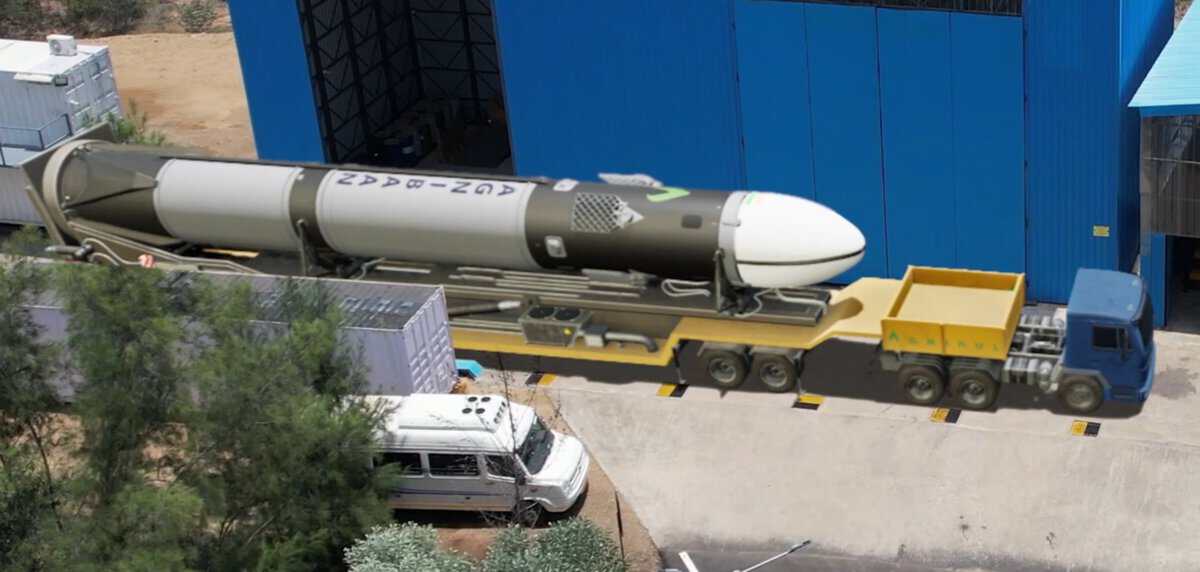
The cluster test is a critical qualification step for Agnikul's Agnibaan launch vehicle, a modular small-satellite rocket designed to place up to 100 kg into a 700 km orbit. Unlike conventional launch vehicles that use fixed engine configurations, Agnibaan is being developed around a plug-and-play clustering philosophy: engines can be added or removed depending on mission requirements, potentially scaling from four to seven or even fourteen units.
Srinath Ravichandran has stated that if a mission does not require all engines, some can be removed to reduce launch costs for the customer. The company has indicated that future engine additions to its clusters will likely increase non-linearly.
Additive Manufacturing Speeds Production
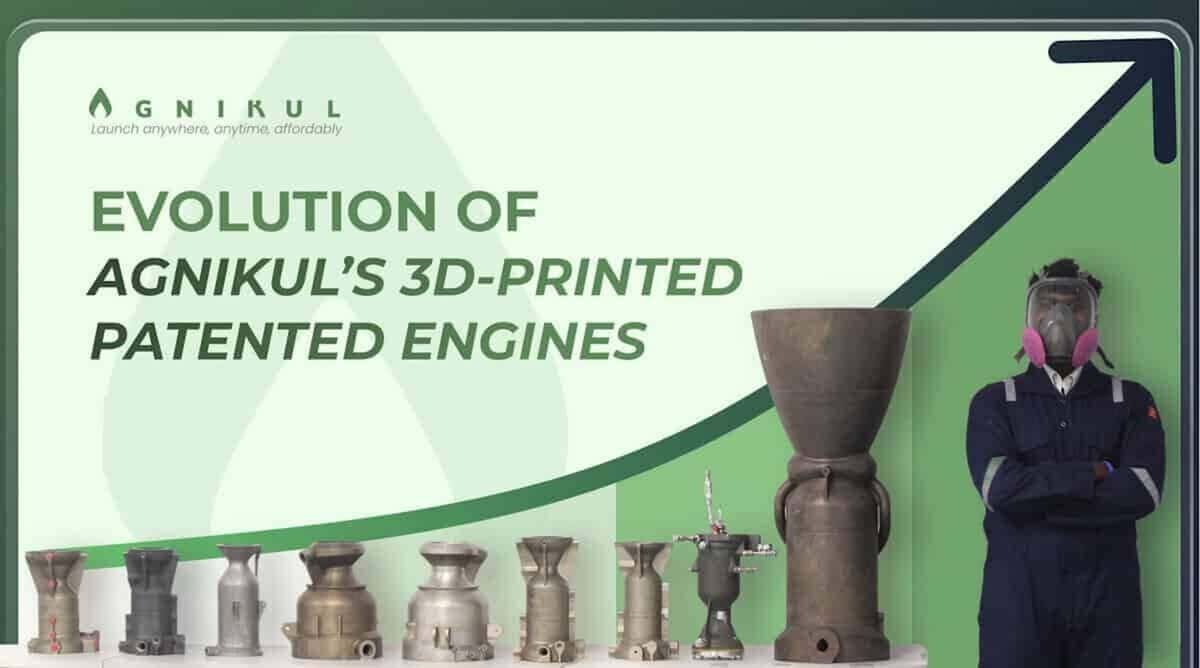
Conventional rocket engine fabrication typically requires assembling hundreds of individually machined components using welds, bolts, and fasteners, a process that can take months and limits production scalability. Central to Agnikul's approach is its use of additive manufacturing to produce each 3D-printed rocket engine as a single piece of hardware, eliminating that complexity entirely. The company says this reduces production timescales from months to days, enabling manufacturing output to match customer demand rather than constrain it.
The electric pump-fed architecture also supports Agnikul's longer-term reusability ambitions. By reducing the number of components requiring refurbishment between flights, the design could eventually enable recovery of the rocket booster via a sea-based barge landing, similar in concept to the systems used in the wider commercial launch industry.
Path to Orbital Flight
Agnikul completed a sub-orbital technology demonstration flight in May 2024, making Agnibaan SOrTeD the world's first rocket powered by a single-piece 3D-printed engine. Since that flight, the company has focused on ground-based propulsion qualification, advancing from single-engine to multi-engine cluster tests. Earlier this year, Agnikul also test-fired its Agnite engine, described as the largest single-piece 3D-printed rocket engine built to date.
The company has indicated it is aiming for its next launch before the end of 2026, though regulatory approvals and mission logistics are still being finalised. The successful four-engine cluster test positions Agnikul closer to integrated stage-level testing and, ultimately, commercial launch services in the growing small-satellite market, part of a broader shift towards 3D printing in Indian aerospace that has seen multiple propulsion milestones from both private startups and ISRO in 2026. The startup has acknowledged the support of IIT Madras, ISRO, and IN-SPACe in its development programme.


