



3D printing in Indian aerospace has achieved significant milestones in 2026: additive manufacturing is no longer a prototyping tool but the core production architecture for rocket engines, satellite components, and military hardware. From ISRO’s 3D-printed PS4 engine to Agnikul’s single-piece Inconel rocket engine, India’s space and defence sectors are deploying metal AM at a scale that was difficult to foresee even three years ago.
I have tracked the Indian additive manufacturing ecosystem since its earliest days, and 2026 feels distinctly different from any period before it. What we are witnessing is not incremental progress but a structural shift: one where 3D-printed rocket engines are flying, private launchpads are operational, and domestic certification frameworks are maturing rapidly enough to keep pace with the engineering ambition.
3D Printing in Indian Aerospace Today
The Indian aerospace sector has moved decisively from experimental prototyping to industrial-scale serial production in 2026, driven by aerospace additive manufacturing India initiatives. This shift is the result of expanding commercial space order books, stringent domestic defence mandates under the Atmanirbhar Bharat policy, and the maturation of indigenous material certification frameworks and opening up of the space sector by the government. Additive manufacturing now serves as the foundational manufacturing architecture for critical propulsion systems, load-bearing structures, and avionics enclosures across both private spaceflight and military aviation.
Several verified milestones confirm 2026 as an inflection year for 3D printing in Indian aerospace.
- On 27 January 2026, Indian Space Research Organisation (ISRO) conducted a successful hot-fire test of a sub-scale thrust chamber for its LOX-Methane engine at the ISRO Propulsion Complex (IPRC) in Mahendragiri, Tamil Nadu. The sub-scale thrust chamber and single-element injector head were fully realised through additive manufacturing, achieving a chamber pressure of 56 bar. Wipro 3D manufactured the critical metal components using Laser Powder Bed Fusion (LPBF) in copper alloys and nickel-based superalloys.
- In February 2026, Agnikul Cosmos achieved India’s first private cluster firing of three semi-cryogenic engines simultaneously.
- In March 2026, Agnikul test-fired the Agnite booster engine, at one metre in length, the world’s largest single-piece 3D-printed Inconel rocket engine.
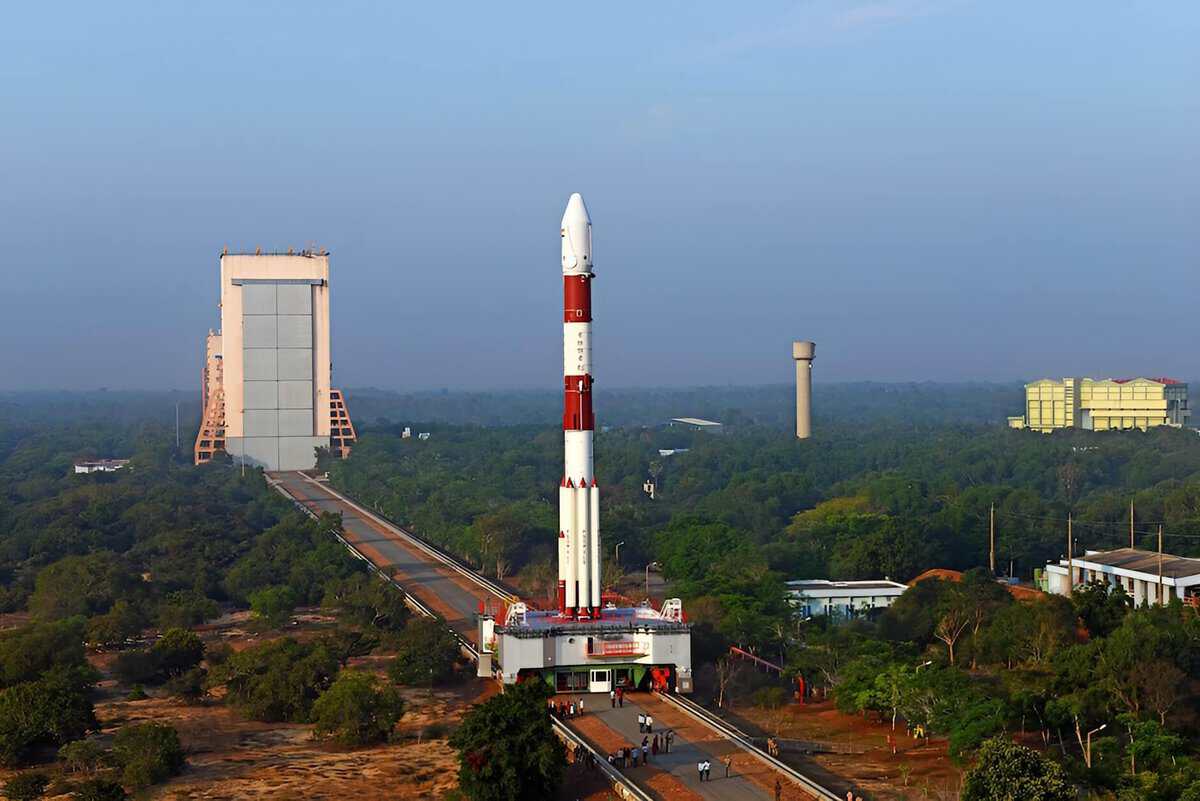
- And on 25 April 2026, Skyroot Aerospace flagged off the flight hardware of the Vikram-1 orbital launch vehicle from its Max-Q campus in Hyderabad, positioning the company for India’s first privately built orbital launch attempt.
The macroeconomic backdrop supports this momentum in aerospace additive manufacturing India. India’s space economy stands at approximately US $8.4 billion (₹70,000 crore) in 2022, with a government target of US $44 billion by 2030, representing 8–10% of the global space economy. The Department of Space received an allocation of ₹13,416 crore (approximately US $1.6 billion) in the last Union Budget, and India now has 399 active space startups as of January 2026. Private investment in Indian space companies has crossed US $600 million in the current fiscal year.
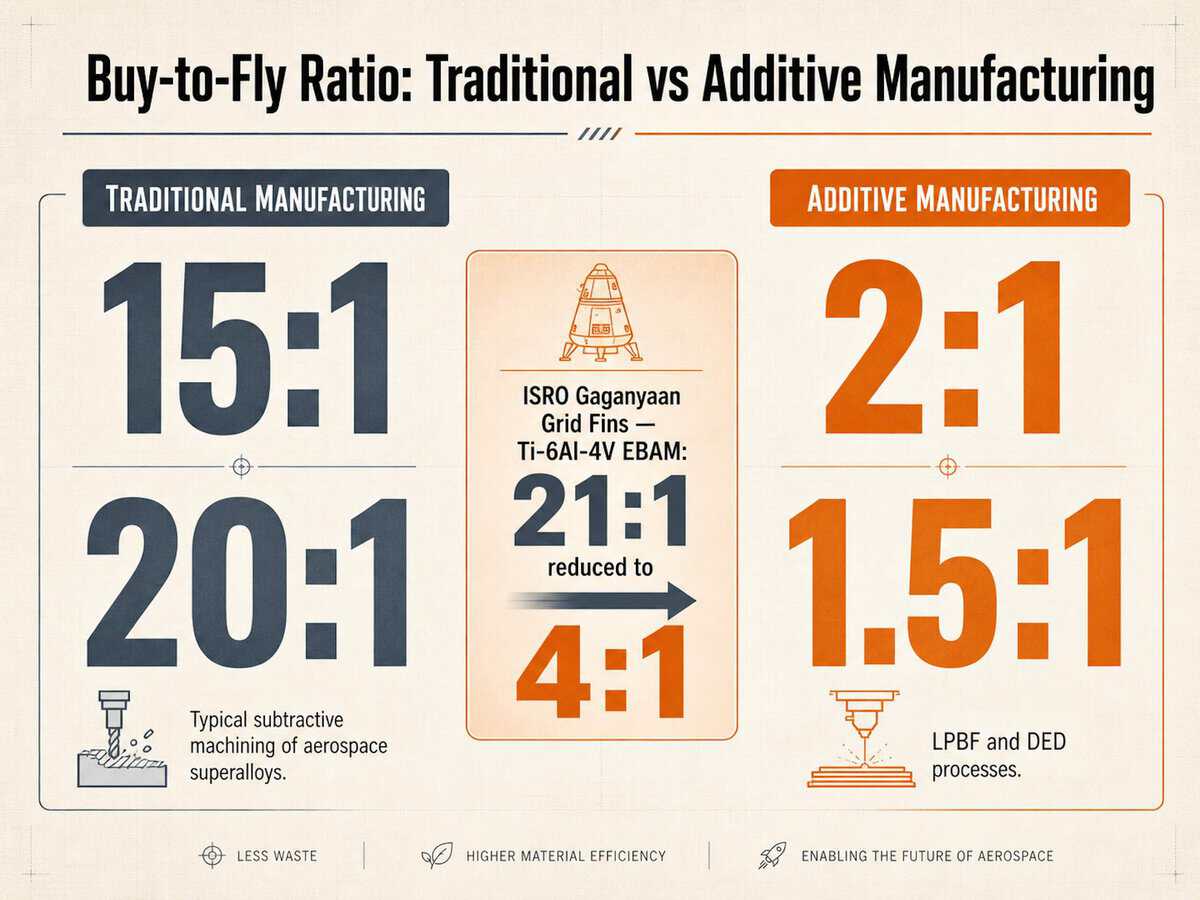
For aerospace engineers and supply chain managers, 3D printing in Indian aerospace is primarily driven by the aggressive reduction of the buy-to-fly ratio, the mass of raw material required to produce a final, flight-ready component. Traditional subtractive manufacturing of complex aerospace alloys often yields buy-to-fly ratios as high as 15:1 or 20:1. By contrast, LPBF and Directed Energy Deposition (DED) techniques deployed across Indian facilities regularly achieve ratios approaching 2:1 or 1.5:1.
This material efficiency becomes absolutely critical when processing high-cost superalloys such as Inconel 718 and aerospace-grade titanium (Ti-6Al-4V), the same alloy family used in the 3D-printed titanium grid fins for ISRO's Gaganyaan mission, where EBAM (Electron Beam Additive Manufacturing) reduced the buy-to-fly ratio from 21:1 to 4:1, and where tool wear and machining times previously dictated prohibitive costs.
Developments by Indian Aerospace Startups and Govt. Agencies
Skyroot’s 3D Printed Vikram Engines
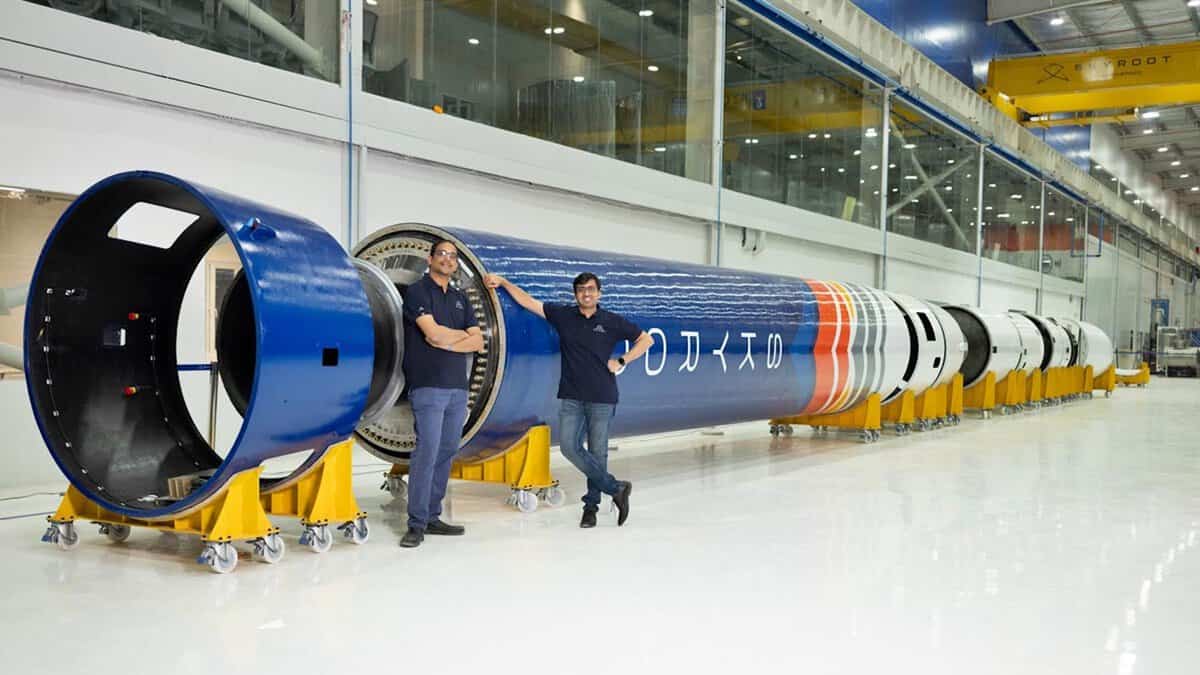
Skyroot Aerospace, headquartered in Hyderabad, operates at the frontier of India's private launch sector, developing its 3D printed Vikram engines by leveraging additive manufacturing to achieve mass optimisation, part consolidation, and rapid production cadences for its Vikram series of orbital launch vehicles. Following the successful sub-orbital flight of the Vikram-S in November 2022 (India’s first privately launched rocket) the company has focused its resources on the Vikram-1 orbital vehicle.
In April 2026, Skyroot reached a pre-launch milestone by formally dispatching the flight hardware for the Vikram-1 from Hyderabad to the Satish Dhawan Space Centre (SDSC) at Sriharikota. Telangana Chief Minister A. Revanth Reddy and Minister D. Sridhar Babu flagged off the space-ready payload fairing from Skyroot’s Max-Q campus. As of late April 2026, over 70% of the Vikram-1 flight hardware had been integrated at the spaceport, positioning the company for a maiden orbital launch attempt in the May–June 2026 window.
The Vikram-1 stands approximately 23 metres tall with an all-carbon composite airframe. It uses a three-stage solid propulsion stack: Kalam-1200 (first stage, peak thrust of approximately 1.2 MN), Kalam-250 (second stage), and Kalam-125 (third stage), with a liquid-propellant orbit-adjustment module as the final stage.
It is within this upper-stage propulsion system that aerospace additive manufacturing demonstrates its strongest engineering advantage through Skyroot’s extensive use of metallic additive manufacturing. The orbit-adjustment module is powered by a cluster of four 3D-printed Raman-2 engines operating on a hypergolic bi-propellant combination of Dinitrogen Tetroxide (N₂O₄) and Monomethylhydrazine (MMH). Each Raman-2 engine produces approximately 820 N at sea level and 1,460 N in vacuum. Roll control is provided by four Raman-1 engines, each producing a peak vacuum thrust of approximately 890 N.
The decision to 3D print these engines addresses a genuine engineering bottleneck. Traditional manufacturing of coaxial swirl injectors and regenerative cooling channels involves deep-hole drilling and vacuum brazing, but these processes also introduce thermal stress and can also lead to potential leak paths. LPBF however allows for the direct manufacturing of these conformal cooling channels as a single contiguous unit, reducing the component’s mass by approximately 50% and cutting lead time by around 80% and also improving the heat dissipation from the engine.
Beyond the 3D printed Vikram engines powering the Vikram-1's upper stage, Skyroot's AM capabilities are central to the development of the Vikram-II vehicle, which targets a 900 kg Low Earth Orbit (LEO) payload capacity. The upper stage of the Vikram-II will feature the Dhawan-II, a fully 3D-printed cryogenic engine operating on Liquid Oxygen (LOX) and Liquefied Natural Gas (LNG), producing 3.5 kN of thrust. The Dhawan-II completed a 200-second fire-endurance test in 2023.
Skyroot’s financial strategy reflects the cost advantages of AM-driven production. In March 2026, the company raised US $10.75 million (₹100 crore) in debt financing via non-convertible debentures led by BlackRock, bringing cumulative funding to approximately US $109 million. Reports indicate that Skyroot is pursuing a US $150–$200 million equity round targeting unicorn valuation.
Agnikul’s Single-Piece 3D Printed Engines
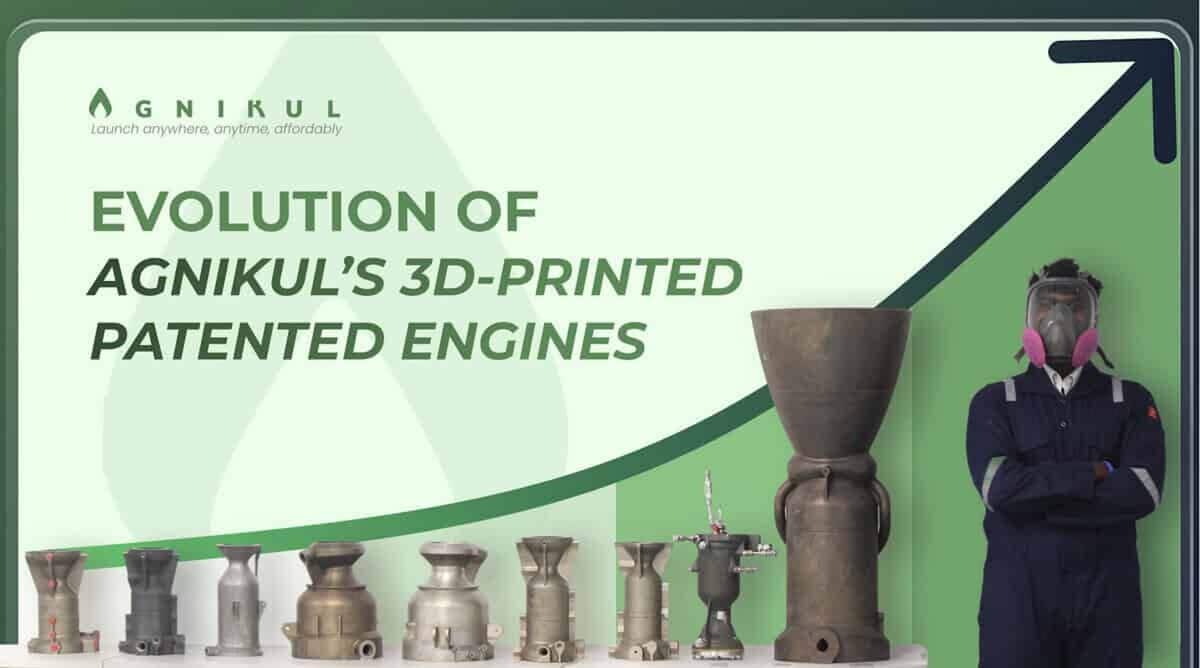
Agnikul Cosmos, based at the IIT Madras Research Park in Chennai, has pioneered single-piece 3D printed engines as a globally distinct propulsion architecture and represents a breakthrough in aerospace additive manufacturing India by designing, manufacturing, and flight-testing the world's first single-piece, 3D-printed semi-cryogenic rocket engines.
The company’s core output is the Agnilet engine, a 6.2 kN semi-cryogenic engine operating on LOX and Aviation Turbine Fuel (ATF). Unlike conventional engines that rely on gas generators to drive turbines, the Agnilet uses electric motor-driven pumps, eliminating complex high-temperature gas plumbing and allowing the entire combustion chamber, injector head, and nozzle to be printed as a single monolithic structure: no welds, no joints, no fasteners.
On 30 May 2024, Agnikul made history when its Agnibaan SOrTeD became the first-ever launch vehicle to fly on single-piece 3D printed engines, lifting off from India's first private launchpad at SDSC-SHAR Sriharikota and validating the structural integrity of the monolithic engine design under actual flight conditions.
In February 2026, Agnikul conducted a historic cluster firing of three Agnilet engines simultaneously at Rocket Factory-1 in Chennai. The test required precise synchronisation of six electric pumps and six separate motors, governed by proprietary speed-control algorithms. In March 2026, the company test-fired the Agnite booster engine, at one metre in length, the world’s largest single-piece 3D-printed Inconel rocket engine.
In my observation, the fact that Agnikul can produce a complete, flight-ready engine in approximately seven days, down from the conventional seven-month timeline, represents one of the most significant production-capability improvements in 3D printing in the Indian aerospace industry. The company holds a US patent for its single-piece engine design and manufacturing process, granted in August 2025.
Agnikul's Rocket Factory-1, opened in July 2022, was purpose-built to mass-produce single-piece 3D printed engines and houses an EOS M 400-4 metal 3D printer (400 × 400 × 400 mm build envelope) designed for a throughput of two engines per week. Under a memorandum of understanding between the two companies, EOS's Additive Minds division provides technical assistance to Agnikul in advancing 3D printing of rocket engines through to space qualification.
For metre-scale parts, the company has commissioned a separate Large Format Additive Metal Manufacturing (LFAMM) Unit equipped with what is understood to be an AMCM M 4K system (450 × 450 × 1,000 mm). The company's valuation now exceeds US $500 million, with cumulative funding reaching approximately US $85.8 million.
Astrobase’s 3D Printed FFSC Engines
Astrobase Space Technologies, a Bengaluru-based New Space startup founded in 2024 by Neeraj Khandelwal and former ISRO scientist Devakumar Thammisetty, is advancing aerospace additive manufacturing India by developing the country’s first 3D-printed Full Flow Staged Combustion (FFSC) rocket engines.
To support this ambitious architecture, Astrobase recently installed what it claims to be India’s largest industrial-scale metal 3D printer, superseding the capacity record previously held by Agnikul Cosmos. This massive equipment is capable of producing multiple 80-tonne-thrust FFSC engines annually, underscoring a vertically integrated approach to establishing in-house production infrastructure from the ground up.
The company's core development is an 800 kilonewton thrust liquid oxygen-methane (LOX-methane) FFSC engine. The FFSC cycle is exceptionally thermally efficient but notoriously complex; leveraging large-format metal AM allows Astrobase to consolidate core assemblies and achieve the rapid production cadences required to manage extreme temperatures and pressures. This engine is intended to power a two-stage, medium-lift, partially reusable launch vehicle optimized for satellite deployments and sovereign payloads.
Astrobase is moving rapidly through its testing roadmap, having completed sub-scale hot-fire tests in September 2025 to validate combustion stability, materials, and flow systems. With regulatory clearance now secured for a private high-thrust LOX-LNG test facility in Andhra Pradesh, full-scale engine tests are scheduled for late 2026. This timeline sets the stage for a vertical takeoff, vertical landing (VTVL) prototype demonstration targeted for 2027, and a maiden orbital launch set for 2029.
ISRO’s Additive Manufacturing Programme
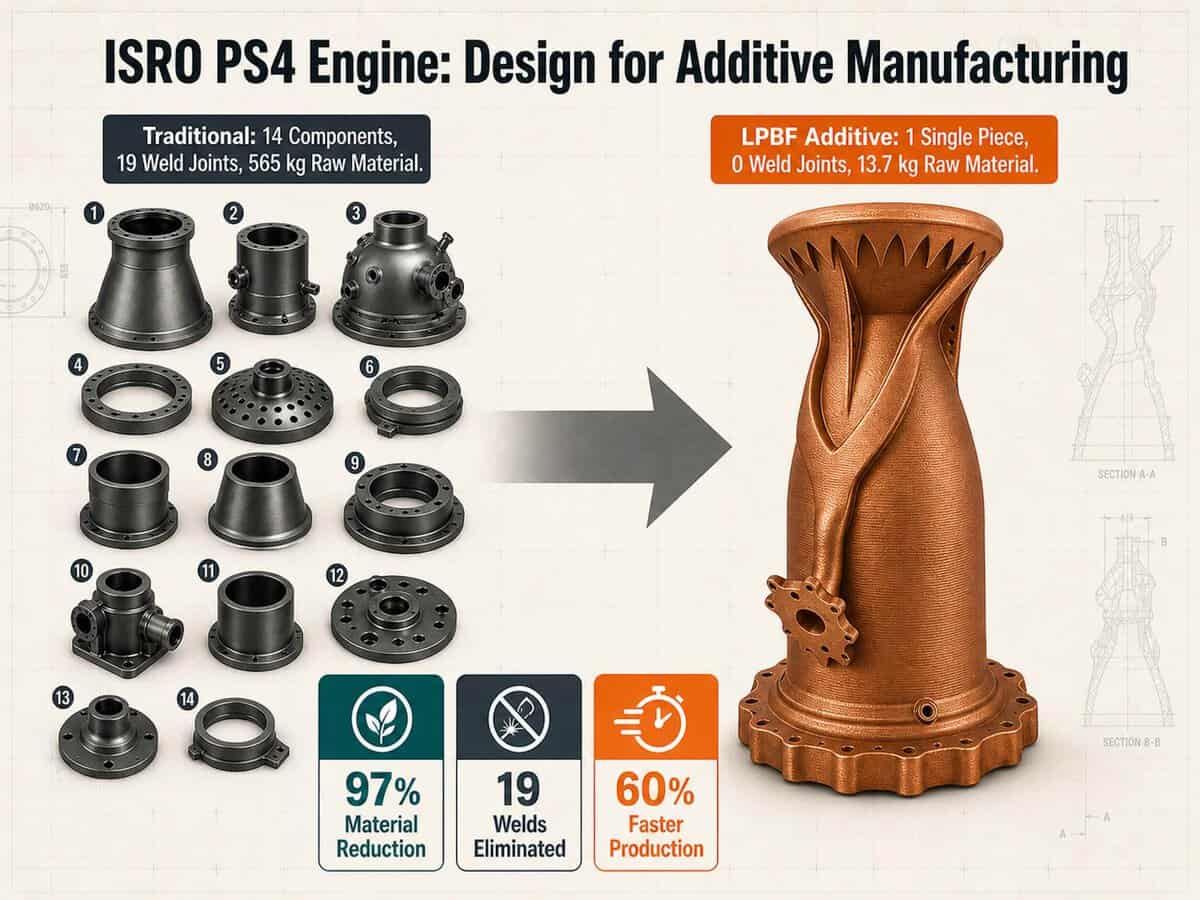
ISRO has transitioned additive manufacturing into the critical path of its propulsion and structural programmes, reinforcing India’s leadership in aerospace additive manufacturing India. The most documented application is the 3D-printed PS4 engine: the Polar Satellite Launch Vehicle (PSLV) upper stage. The engine was redesigned by ISRO’s Liquid Propulsion Systems Centre (LPSC) using Design for Additive Manufacturing (DfAM) principles and manufactured by Wipro 3D using LPBF. The redesign consolidated 14 components into a single piece, eliminated 19 weld joints, reduced raw-material consumption from 565 kg to 13.7 kg per engine, and cut production time by 60%. The engine cleared a 665-second hot test on 9 May 2024 and is being inducted into the regular PSLV programme.
According to Rosatom’s announcement and multiple Indian trade publications, ISRO’s Vikram Sarabhai Space Centre (VSSC) has commissioned a RusBeam 2800 EBAM system in April 2026, a wire-deposition system operating under vacuum, capable of producing components up to 2.8 metres in height and 4 tonnes in mass. Its quoted deposition rate is 50 mm/s.
I have followed large-format AM deployments globally, and if the RusBeam 2800 specifications are confirmed, it would position ISRO with one of the largest vacuum-operated metal AM build envelopes in any national space agency.
ISRO is also expanding its polymer AM capabilities with the Akasha300 printer from Kerala-based Spacetime 4D, designed to process PEEK, PEKK, and carbon fibre-reinforced composites for non-combustive spacecraft components.
During one of my interactions with scientists from ISRO, I learnt that the agency has been mandated to manufacture at least 10% of its mission components through additive manufacturing. If this target is met within the next five years, not only will India's 3D printing industry gain a significant growth opportunity, but ISRO will also be positioned to reduce innovation timelines, fast-track multiple missions, and achieve further cost savings across its already cost-effective space programme.
Certified Indian AM Service Providers
Wipro 3D (Bengaluru) maintains AS9100, ISO 9001:2015, and Lloyd’s Register AM certification, making it a major enabler of 3D printing in Indian aerospace. In April 2026, it partnered with Toyota Kirloskar Motor to establish an AM Centre of Excellence. Intech Additive Solutions (Bengaluru) is India’s first LPBF OEM (Original Equipment Manufacturer), with its iFusion450-8 featuring eight synchronised 500 W lasers. Godrej Aerospace (Mumbai) partnered with EOS in 2025. Objectify Technologies holds AS9100 Rev D certification. Imaginarium Rapid (Mumbai) is AS9100D-certified with estimated 2026 revenue exceeding ₹100 crore.
Aerospace 3D Printing Materials Overview
The structural integrity of any 3D-printed aerospace component is governed by the quality of its raw feedstock, a critical factor in aerospace additive manufacturing. In my experience reviewing AM part qualifications, material consistency is the single factor most frequently underestimated by organisations new to the technology.
| Material Class | Alloy | Tensile Strength (MPa) | Max Temp (°C) | Primary Application |
| Titanium Alloys | Ti-6Al-4V | 1,050–1,100 | ~400 | Structural frames, brackets, landing gear |
| Nickel Superalloys | Inconel 718 | 1,200–1,400 | ~700 | Combustion chambers, turbine blades, fuel nozzles |
| Aluminium Alloys | AlSi10Mg | 300–450 | ~200 | Avionics enclosures, heat exchangers |
| High-Perf. Polymers | PEEK / PEKK | ~90–110 | ~250 | Wire harnessing, cabin interiors, brackets |
Mishra Dhatu Nigam Limited (MIDHANI) remains India’s principal source of titanium alloys and has announced plans to produce AM powders. PTC Industries secured a VSSC contract in January 2026 for converting titanium sponge into aerospace-grade ingots. International Advanced Research Centre for Powder Metallurgy and New Materials (ARCI) in Hyderabad develops AM powders for strategic applications.
India vs Global AM Benchmarks
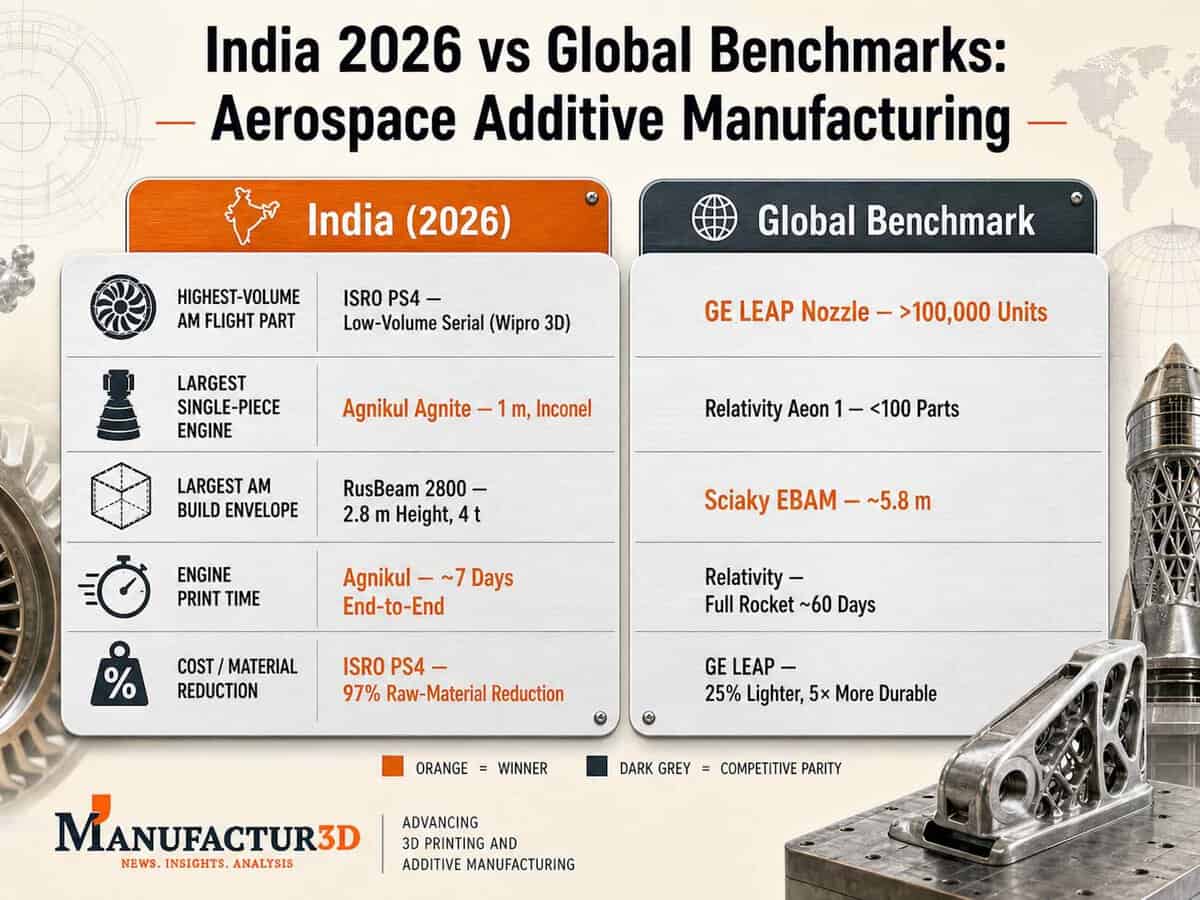
| Technical Metric | India (2026) | Global Benchmark |
| Highest-volume AM flight part | ISRO PS4, low-volume (Wipro 3D) | GE LEAP nozzle, >100,000 units |
| Largest single-piece engine | Agnikul Agnite, 1 m, Inconel | Relativity Aeon 1 (<100 parts) |
| Largest AM build envelope | RusBeam 2800, 2.8 m, 4-tonne (per Rosatom) | Sciaky EBAM, up to ~5.8 m |
| Engine print time | Agnikul: ~7 days end-to-end | Relativity: full rocket in ~60 days |
| Cost/material reduction | ISRO PS4: 97% raw-material reduction | GE LEAP (25% lighter, 5× more durable) |
While global OEMs like GE Aerospace lead in serial production volume, 3D printing in Indian aerospace demonstrates a distinct edge in rapid architectural iteration. Agnikul’s ability to print an entire semi-cryogenic engine as a single monolithic structure is a capability matching the frontier of global commercial space.
Investment and Growth Outlook
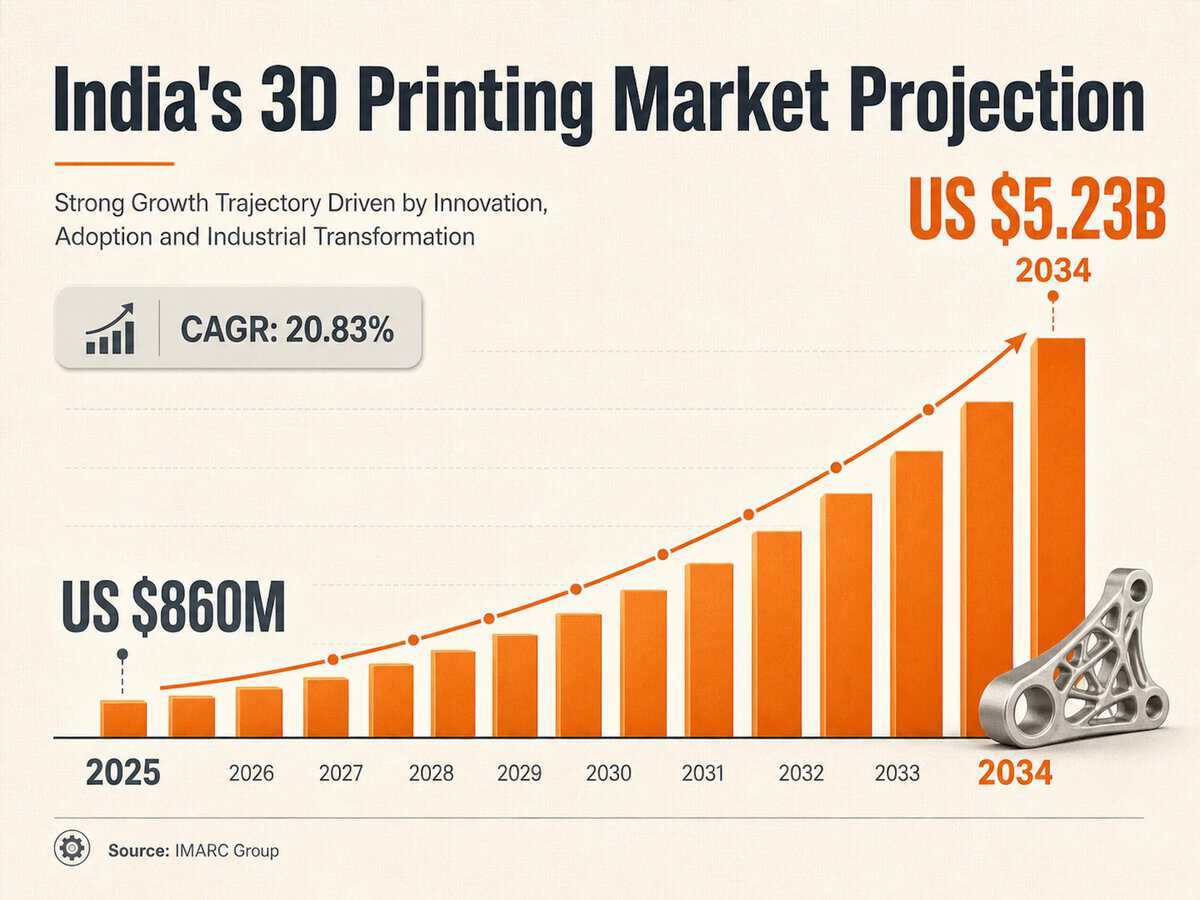
India’s overall 3D printing market is projected to grow from US $860 million in 2025 to US $5.23 billion by 2034 at a CAGR of 20.83% (IMARC Group), driven in part by aerospace additive manufacturing India. The global aerospace 3D printing market is projected to reach US $10.59–$14.53 billion by 2030–2032, with Asia-Pacific as the fastest-growing region.
| Space Startup | Latest Round | Total Raised | Key Milestone |
| Skyroot Aerospace | US $10.75M debt (Mar 2026) | ~US $109M | Vikram-1 dispatched; launch May–Jun 2026 |
| Agnikul Cosmos | Equity + debt (2025–26) | ~US $85.8M | Agnite test-fired; valuation >US $500M |
The convergence of deep-tech venture funding, rising defence budgets, and a growing commercial aviation order book ensures that 3D printing in Indian aerospace will continue its growth trajectory.
Frequently Asked Questions Answered
Which Indian rocket engine was the first to fly with a fully 3D-printed single-piece design?
Agnikul Cosmos’s Agnilet, an electric pump-fed semi-cryogenic engine using sub-cooled LOX and ATF, became the world’s first single-piece 3D-printed rocket engine to fly when the Agnibaan SOrTeD vehicle lifted off from SDSC-SHAR Sriharikota on 30 May 2024.
What additive process did Wipro 3D and ISRO use for the PS4 engine?
Laser Powder-Bed Fusion (LPBF), preceded by a DfAM redesign by ISRO’s Liquid Propulsion Systems Centre (LPSC). The redesign consolidated 14 components into one piece, eliminated 19 weld joints, and reduced raw-material consumption from 565 kg to 13.7 kg per engine.
How long does Agnikul take to 3D-print one engine?
Approximately 72–75 hours of raw print time, with the full process taking around seven days. Rocket Factory-1 has a capacity of two engines per week, compared to ~10–12 weeks for conventional manufacturing.
How does India’s capability compare with NASA and GE Aerospace?
GE Aerospace has shipped >100,000 LPBF fuel-nozzle tips for the LEAP engine. NASA uses GRCop-42 copper alloys for combustion chambers. India is at a smaller production scale but at parity on key milestones: single-piece engine printing, LPBF combustion chambers, and large-scale EBAM deployment.


