



Aibuild, the UK-based manufacturing software company, has launched Aibuild FETS, a finite element thermomechanical additive manufacturing simulation tool that the company claims runs up to 10,000 times faster than comparable solutions currently available.
Conventional finite element simulation for additive builds can require hours or days of computation on specialist hardware with dedicated workflows, creating a bottleneck that has long limited how engineering teams iterate on build strategies. The GPU-powered Aibuild FETS software has been validated by the National Institute for Aviation Research (NIAR), one of the United States aerospace industry's most respected independent testing bodies, lending third-party credibility to its performance claims.
Additive Manufacturing Simulation Output Types
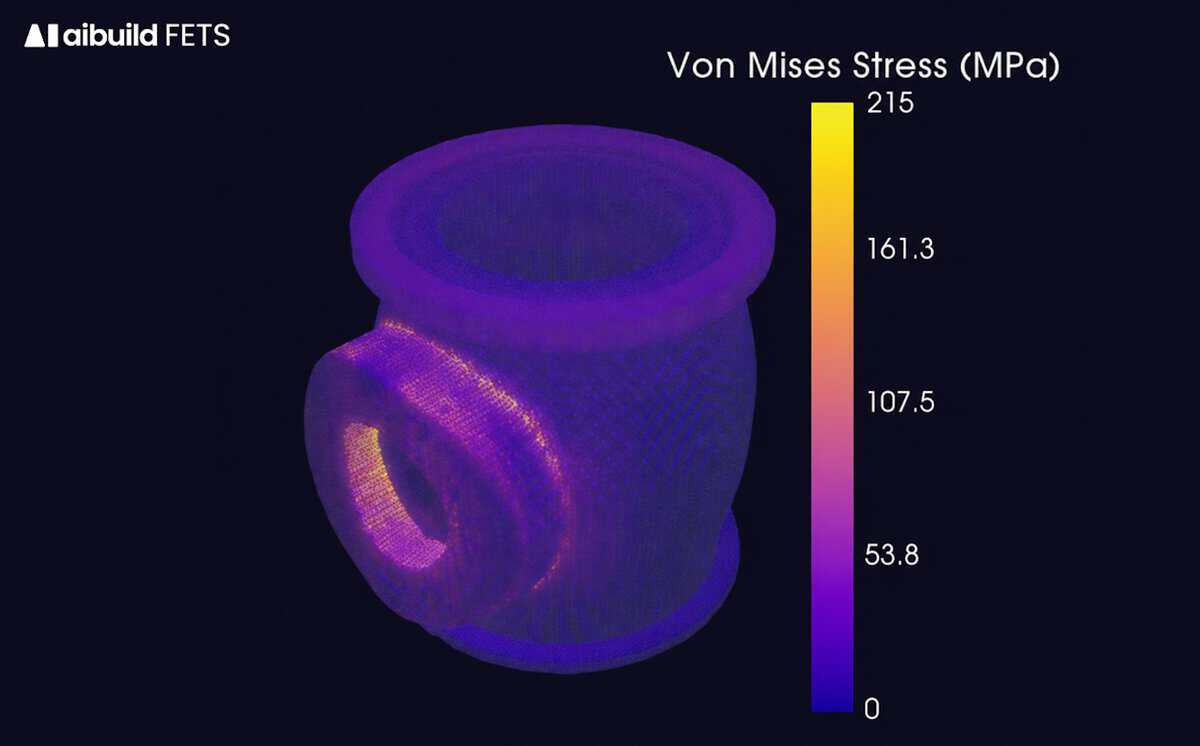
Aibuild FETS supports a broad range of additive manufacturing processes, including Directed Energy Deposition (DED), Wire Arc Additive Manufacturing (WAAM), Friction Stir Additive Manufacturing (AFSD), Fused Granulate Fabrication (FGF), and Fused Filament Fabrication (FFF), covering both metals and thermoplastics.
The tool delivers simulation across six key output types: thermal distribution, thermomechanical behaviour, distortion, residual stress, interlayer bonding analysis (including poor adhesion and sagging or slumping), and crack prediction from simulated stress. According to Aibuild, engineering teams can now identify thermal risk, predict distortion, and understand residual stress distribution before a single layer is deposited.
GPU-Powered Speed Without Specialist Hardware
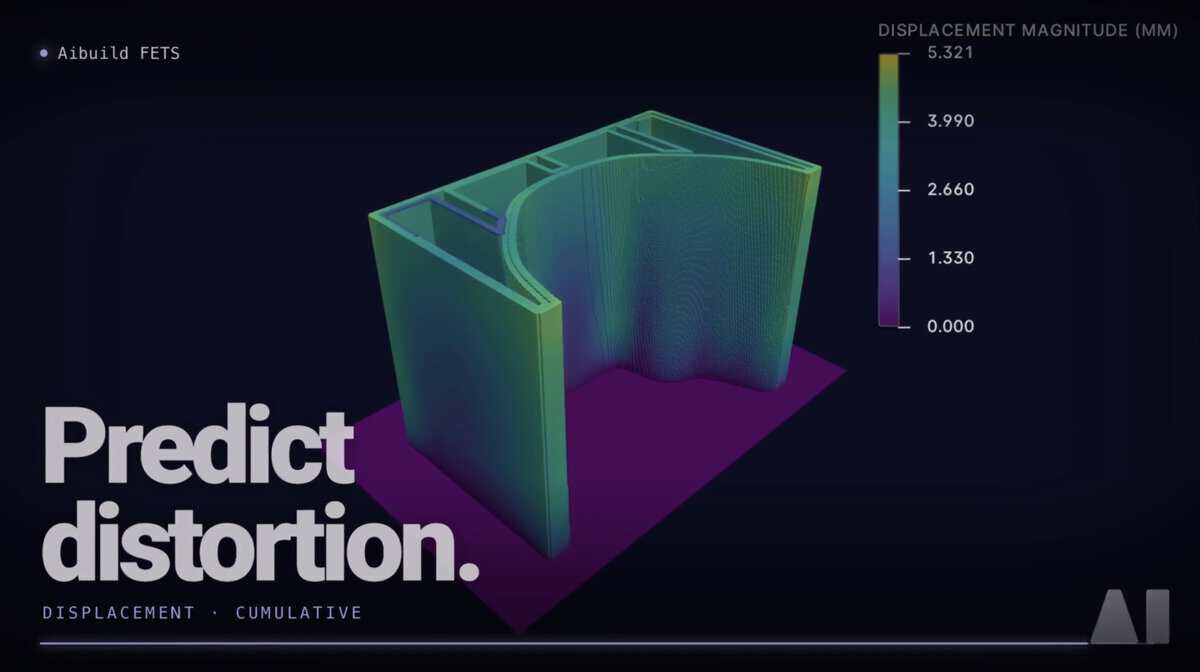
The speed claim centres on GPU acceleration. Aibuild states that FETS returns results in significantly less time than traditional simulation workflows while maintaining consistency with industry-validated finite element methods.
The software is CAM-agnostic, meaning it can integrate directly into existing workflows regardless of which computer-aided manufacturing platform a team currently uses. Aibuild also emphasises that the calibration process is designed to get teams operational quickly without extensive onboarding.
"We kept hearing the same thing from engineers. I know simulation is the right thing to do, but I just can't wait three days for an answer. A failed build is often thousands of dollars in material, machine time and energy, and hours of someone's time you can't get back. Engineers can now just know whether a part will print successfully, in seconds, before any of that money is on the line."
— Guy Brown, CSO at Aibuild
NIAR Validation Strengthens Aerospace Credentials
The involvement of NIAR is particularly significant for aerospace applications of additive manufacturing, where thermal control remains one of the primary barriers to scaling large-format metal 3D printing. NIAR's validation confirms that Aibuild FETS produces results consistent with established finite element simulation standards, a critical requirement for engineering teams operating in regulated industries.
"Thermal control has been one of the biggest challenges holding back metal additive at industrial scale. For the aerospace manufacturers we work with, this represents a validated path forward: they can adopt large-format metal AM with the thermal process control they need, and the platform will keep getting faster as AI capabilities come online."
— Jeswin J. Chankaramangalam, Program Director, NIAR
Competitive Landscape and Availability
Aibuild FETS enters a competitive AM simulation market that includes established simulation tools from Ansys, Siemens Simcenter, Autodesk Netfabb, and Simufact, among others. The market is projected to grow from US $800 million in 2024 to US $2.5 billion by 2033, reflecting the increasing importance of simulation in production-scale additive manufacturing workflows.
What distinguishes Aibuild's offering is the combination of claimed speed, multi-process coverage, and the absence of specialist hardware requirements. Whether the 10,000-times-faster benchmark holds across all process types and part complexities remains to be demonstrated through broader independent testing.
Aibuild FETS is available now, with an exclusive offer for teams that adopt before the end of May 2026.


