



Researchers at the University of Mississippi’s Department of Pharmaceutics and Drug Delivery have developed a 3D printed bandage for chronic wounds using biodegradable chitosan and a plant-derived antimicrobial compound to promote healing and reduce infection risk. The customisable wound scaffold was detailed in a study published in the European Journal of Pharmaceutics and Biopharmaceutics.
The research team, Michael Repka, distinguished professor of pharmaceutics and drug delivery; Sateesh Kumar Vemula, postdoctoral researcher; and doctoral candidate Nouf Alshammari, designed the scaffold to address persistent sores, diabetic ulcers, and pressure wounds that can linger for months or years.
What Is a 3D Printed Bandage for Chronic Wounds?
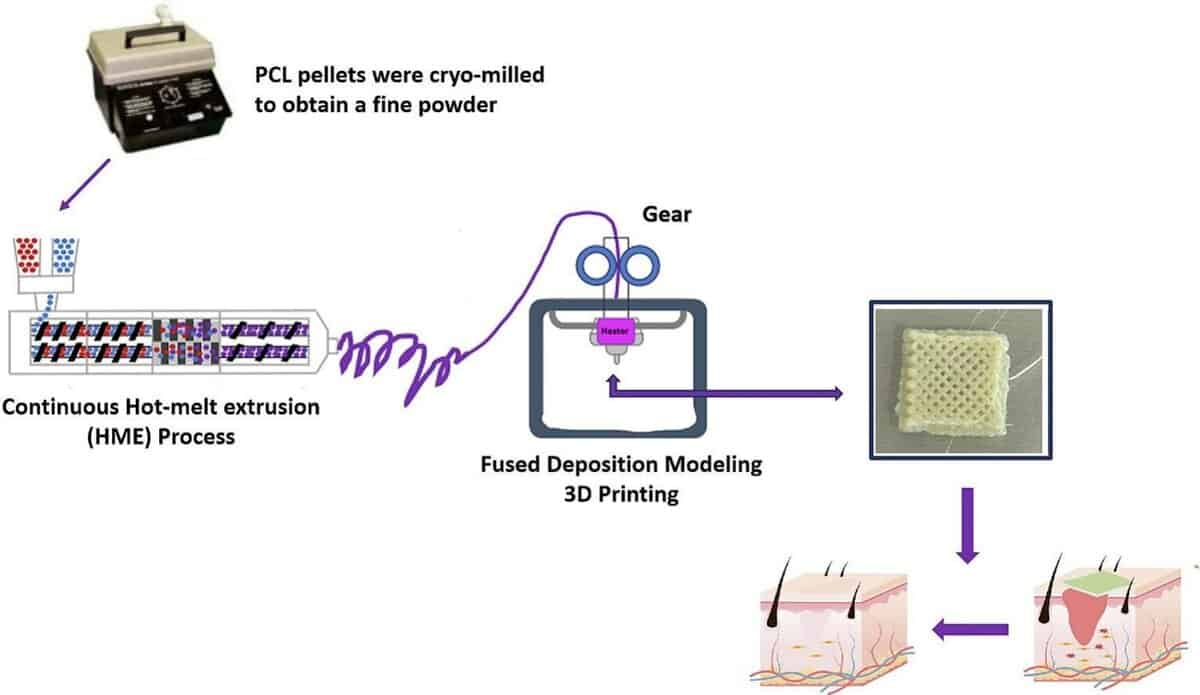
Conventional wound dressings such as gauze and standard bandages offer limited bioactivity, struggle to maintain adequate moisture balance, and cannot sustain the release of therapeutic agents over time. The 3D printed wound scaffold developed at Ole Miss addresses each of these shortcomings. It is a breathable, patch-like structure placed directly over a wound to deliver natural antibacterial compounds gradually. The scaffold is fabricated using chitosan, a natural polymer derived from crustaceans, insects, and fungi, combined with para-coumaric acid (P-CA), a plant-derived phenolic compound with antioxidant and antimicrobial properties.
The team used hot-melt extrusion (HME) combined with fused deposition modelling (FDM) 3D printing to produce the scaffolds. The optimised formulation incorporated polycaprolactone (PCL) and polyethylene oxide (PEO) alongside chitosan and P-CA to achieve the mechanical strength required for clinical application. In-vitro drug release studies demonstrated a biphasic release pattern, with approximately 60% of P-CA released within the first six hours and sustained delivery reaching roughly 90% over 72 hours.
“People with limited mobility or diabetes often have wounds with reduced oxygen supply. This can slow the body’s normal repair process and make wounds more likely to become long-lasting, while also increasing the chance that bacteria can grow and lead to infection.”
— Sateesh Kumar Vemula, Postdoctoral Researcher, University of Mississippi
Solvent-Free Design Addresses Antibiotic Resistance
A key advantage of the biodegradable wound scaffold is its avoidance of organic solvents, which are common in conventional bandage manufacturing but can impede healing when applied directly to damaged tissue.
The approach also avoids the prolonged use of traditional antibiotics, which can contribute to bacterial resistance. Antibacterial testing against Escherichia coli demonstrated that the combination of chitosan and para-coumaric acid produced a synergistic antibacterial effect, outperforming either compound individually.
The approach also avoids the prolonged use of traditional antibiotics, which can contribute to bacterial resistance, a growing global health concern. Repka states that using natural products rather than conventional antibiotics over extended periods reduces the risk of bacteria becoming resistant. Antibacterial testing against Escherichia coli demonstrated that the combination of chitosan and para-coumaric acid produced a synergistic antibacterial effect, outperforming either compound individually.
How It Compares to Traditional Bandages
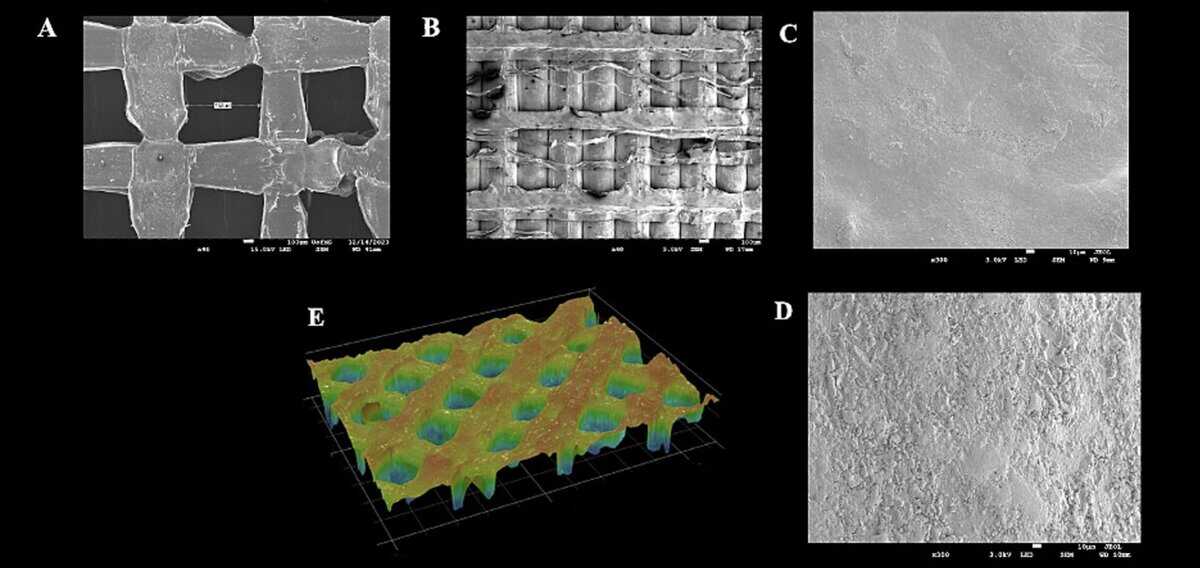
Unlike conventional wound dressings, the 3D printed wound scaffold offers customisation, solvent-free manufacturing, and biodegradable absorption. The 3D printing process allows the patch to be shaped to fit any wound on any part of the body, a patient-specific approach already demonstrating results in India, where IIT Madras has developed customised 3D-printed face implants for mucormycosis patients.
“With time, the scaffold is going to be absorbed into the skin. And it’s an inactive material, so we don’t have to worry about side effects or toxic residuals.”
— Nouf Alshammari, Doctoral Candidate, University of Mississippi
This biodegradable property also makes the technology suitable for internal wounds, where a second incision to remove the dressing would otherwise be necessary.
Potential Applications and Regulatory Path
Beyond diabetic ulcers and pressure sores, the researchers identified broader applications for the 3D printed bandage for chronic wounds, including complex injuries and field medicine. Repka notes that the ability to print wound scaffolds on demand could prove valuable in military settings, echoing a principle already being tested in space, where astronauts aboard the ISS have trialled handheld bioprinters to produce wound patches from their own skin cells.
“If you have a generator that can run these 3D printers, you can print the scaffold you need based on what kind of wound has occurred,” Repka adds.
Before the 3D printed bandage for chronic wounds can be used in clinical practice, further testing and regulatory review by the United States Food and Drug Administration (FDA) will be required. The research team has indicated that translating the technology to patient use remains its primary objective.


