



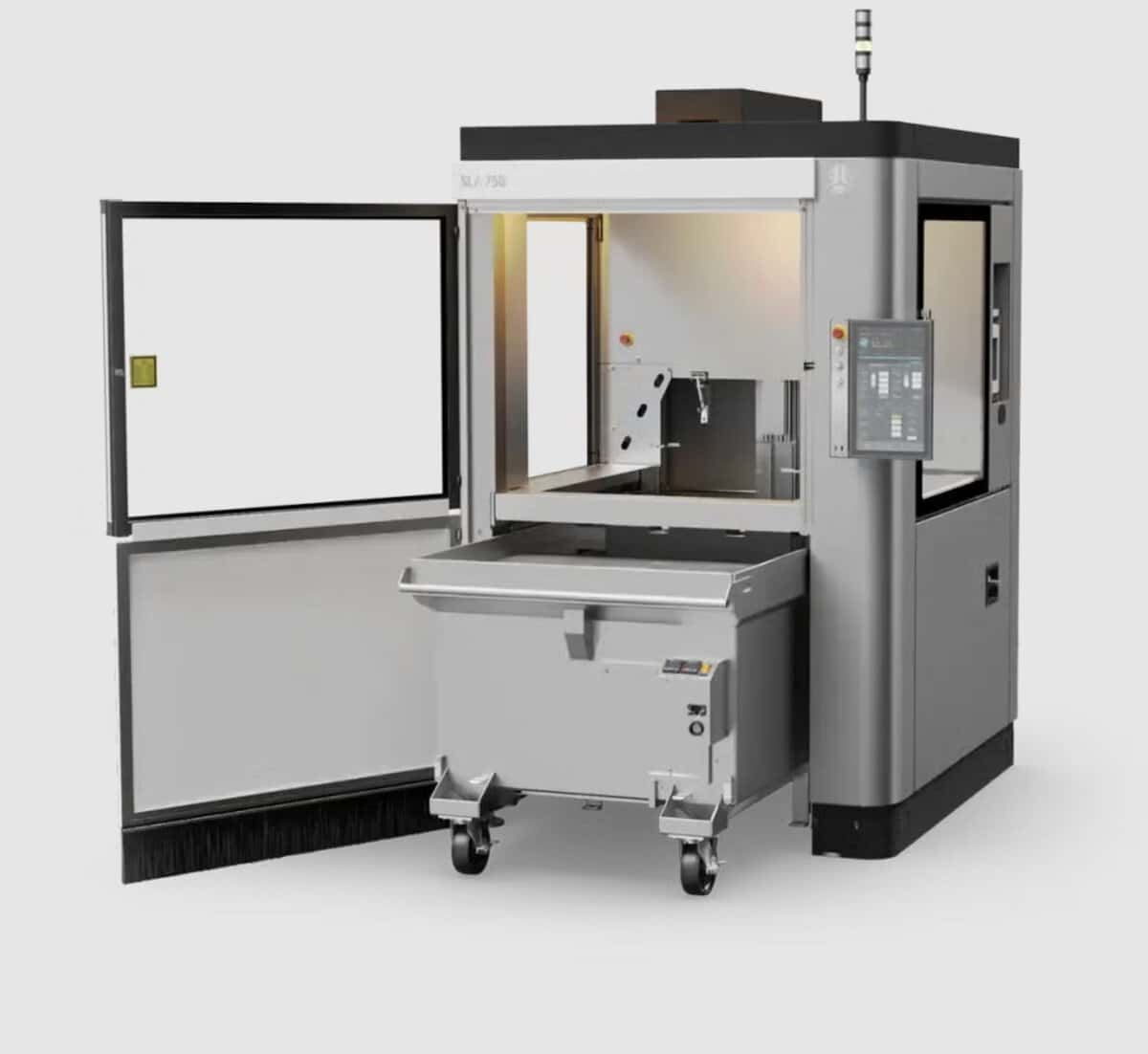
3D Systems (NYSE: DDD), a provider of additive manufacturing solutions across medical, aerospace, defence, and motorsports markets, has announced that the Cadillac F1 3D printing programme played a central role in preparing the team for its 2026 Formula 1 season debut. The Cadillac Formula 1 Team, the newest entrant to the FIA Formula One World Championship, deployed seven SLA 3D printing systems to accelerate wind tunnel testing and production-part development ahead of the season.
The team is the first new entry to the championship in a decade, and its participation marks a return to having two American-backed teams on the Formula 1 grid alongside Haas. Cadillac F1 secured its place in the 2026 season in time for the Formula 1 Qatar Airways Australian Grand Prix 2026 in March.
Cadillac F1 3D Printing Technology Deployed

Cadillac F1's 3D printing deployment centres on 3D Systems' large-format SLA systems, integrated with the company's proprietary software. The team selected three materials from 3D Systems' Accura portfolio for its prototyping and production needs: Accura® Xtreme White 200, an ultra-tough polymer commonly used for vacuum casting master patterns; Accura Xtreme Black, a functional prototyping resin; and Accura HPC (High Performance Composites).
SLA 3D printing delivers production-grade results characterised by sharp part corners, fine extruded and embossed feature details, smooth layer lines on angled faces, and superior side wall definition. For a Formula 1 team operating under tight qualification deadlines, the technology's ability to enable tool-free manufacturing (eliminating weeks of lead time and significantly reducing costs compared to conventional methods) proved essential.
To implement the solution, Cadillac F1 worked with 3D Systems' Application Innovation Group (AIG), a global team of additive manufacturing engineers, designers, and technicians that co-develops manufacturing solutions with customers.
"3D Systems was founded on innovation, pioneering the additive manufacturing industry and we are continuing to lead it into an era of high-precision, highly repeatable production at scale. We are pleased that our work has enabled Cadillac Formula 1 team to enter the 2026 Formula 1 season despite the short timelines and strict qualification conditions."
— Elvis Perez, Senior Vice President, Sales, 3D Systems
Why F1 Teams Need AM
Formula 1 racing operates under some of the most stringent technical requirements in motorsport. Racecar Engineering magazine has described the FIA Formula One World Championship as the greatest challenge a manufacturer of mechanical components may ever face. Aerodynamic development alone demands continuous iteration, with teams producing and testing hundreds of wind tunnel model components across a season.
Additive manufacturing in motorsports has become indispensable precisely because of this iterative pressure. SLA 3D printing allows engineering teams to move from digital design to physical test part in hours rather than weeks, enabling rapid prototyping cycles that are critical to Formula 1 wind tunnel testing programmes. For a new entrant like Cadillac, which had to compress years of development into months, the speed advantage of production-grade additive manufacturing was not a convenience but a necessity.
The Cadillac F1 3D printing deployment also reflects a broader trend across the grid. Multiple Formula 1 teams rely on additive manufacturing for aerodynamic components, jigs, fixtures, and functional prototypes, with SLA and selective laser sintering (SLS) among the most widely adopted processes.
Looking Ahead for Cadillac F1
Following four races into the 2026 season, including its home debut at the Miami Grand Prix, the Cadillac Formula 1 Team has yet to place in the top ten. However, Formula 1 wind tunnel testing and development remain continuous throughout the season, and the team's additive manufacturing infrastructure positions it to iterate on car performance as the year progresses. With seven SLA systems operational and a working partnership with 3D Systems' AIG, Cadillac F1 3D printing capabilities are expected to remain central to the team's ongoing development efforts.


