



For decades, 3D printing has evolved into something almost consumer-appliance-like. Printers moved from factories to design studios, labs, classrooms, and home workshops. But subtractive manufacturing has followed a very different path.
Desktop CNC machines are more accessible now, but most are still 3-axis. True simultaneous 5-axis desktop CNC machining, meanwhile, has stayed in industrial machine shops. The technology is widely used in aerospace, medical manufacturing, automotive, mould making, and precision engineering because it allows cutting tools to approach a workpiece from almost any angle. That means fewer setups, better accuracy, shorter cycles, and the ability to make shapes that are hard or even impossible on 3-axis machines.
Infimaker K1 - The new 5-axis Desktop CNC machine
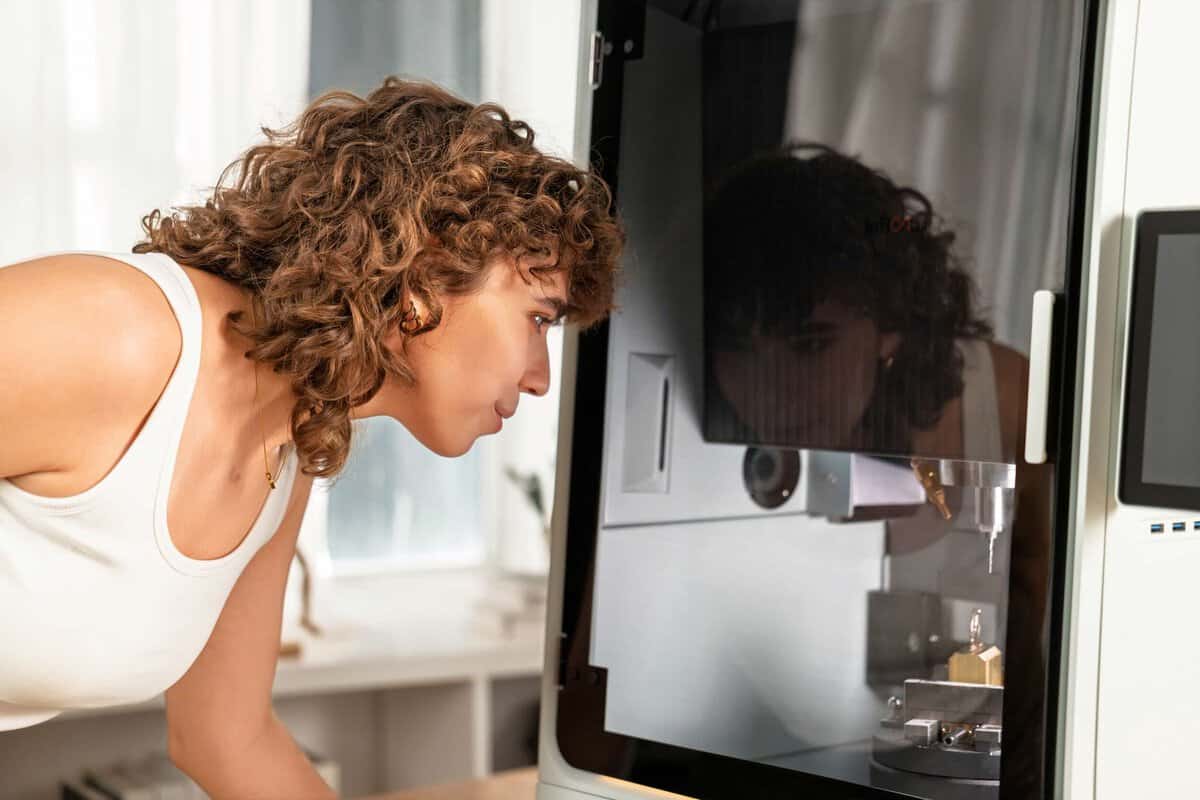
That gap between industrial capability and desktop accessibility is precisely what Shenzhen-based Infimaker is attempting to address. As software becomes more automated and AI-assisted, Infimaker thinks 5-axis no longer needs to be expert-only.
With the goal to lower the barrier to CNC, the company just launched its new desktop CNC platform, the Infimaker K1.
The K1 incorporates true simultaneous 5-axis machining together with an in-house developed 1,500W, 20,000 RPM spindle and 0.01 mm repeatability. It supports machining across a broad range of materials, including aluminium, brass, copper, engineering plastics, wood, acrylic, machinable wax, composites, and even harder metals such as steel and titanium.
Compared with conventional desktop 3-axis machines, simultaneous 5-axis machining allows complex parts to be completed in a single setup rather than repeated manual repositioning. It not only shortens production time but also minimizes cumulative alignment errors.
Hardware is only part of the challenge
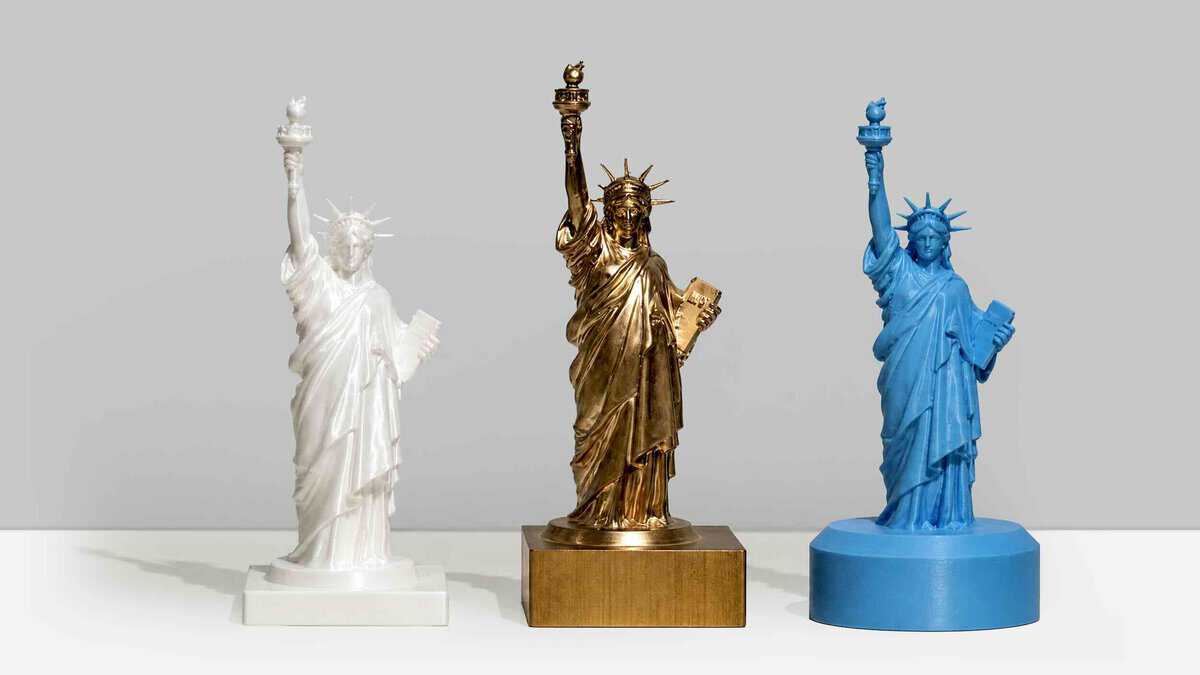
For many first-time CNC users, CAM software remains one of the largest barriers to entry. Toolpath generation, material parameters, feeds and speeds, and work coordinate setup often require hours or even days of learning.
Infimaker's approach is to simplify that workflow through software automation. Its proprietary InfiStudio platform allows users to generate a 3D model from a single image using AI, automatically create machining toolpaths, and send jobs directly to the machine through a touchscreen interface or PC, Mac, iOS, and mobile applications.
The K1 also integrates a six-tool automatic tool changer capable of moving through roughing, finishing, drilling, tapping, and engraving without manual intervention. An automatic ruby touch probe handles workpiece centering, while an AI camera recognizes QR-coded stock materials and configures machining parameters automatically based on material properties.
For decorative and artistic pieces, an AI-assisted workflow can turn a reference image into a 3D model to start from; for precision parts, the K1 works directly from the CAD/CAM files. In both cases, toolpaths are generated automatically. The onboard camera reads the tag and loads the matching material profile and cutting parameters automatically—no manual setup required.
These features aim to reduce repetitive setup work while making advanced CNC workflows accessible to users with little or no prior CAM experience.
Infimaker K1 – Not only for Hobbyists but for manufacturing professionals
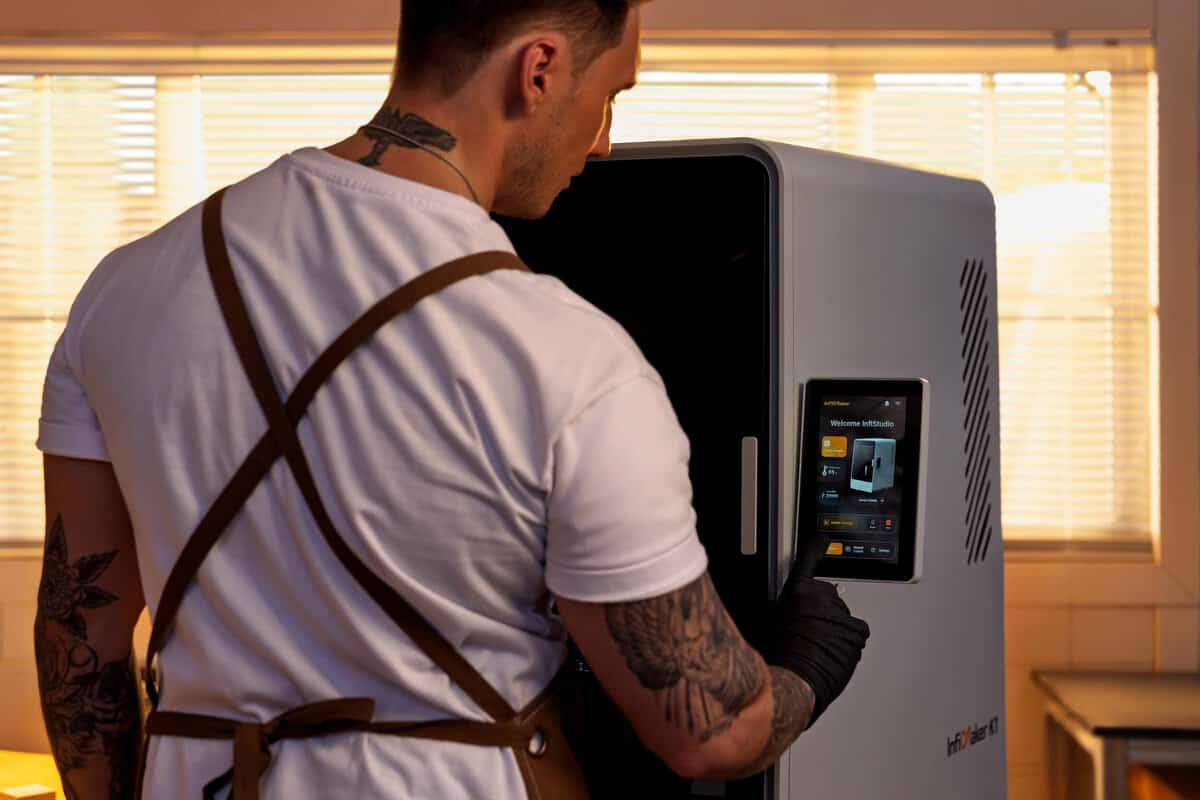
Early beta users have already begun applying the platform across a variety of professional workflows. It has been using the system to produce wax masters for investment casting.
"I've been milling jewellery wax masters directly from CAM, and the surface finish coming off the machine is clean enough that I'm spending significantly less time hand-finishing before casting."
- Sofia M., Los Angeles jewellery designer
For small machine shops, setup time can often outweigh machining time when producing one-off components.
"Setup time is the killer on a large VMC for one-off parts. With the K1, I can have a fixture dialled in and chips flying in around 20 minutes."
- Frank R., owner of a four-person machine shop in Long Island
"This actually feels like a Mac app. The toolpath preview is gorgeous, and the onboarding had me cutting parts on day one. Having this on my desk has compressed my iteration loop from days to hours."
- Daniel K., Robotics engineer from Seattle
These examples illustrate that the platform is being evaluated not only by hobbyists, but also by engineers, designers, and manufacturing professionals looking to shorten development cycles.
Built for the future of Desktop Manufacturing Industry
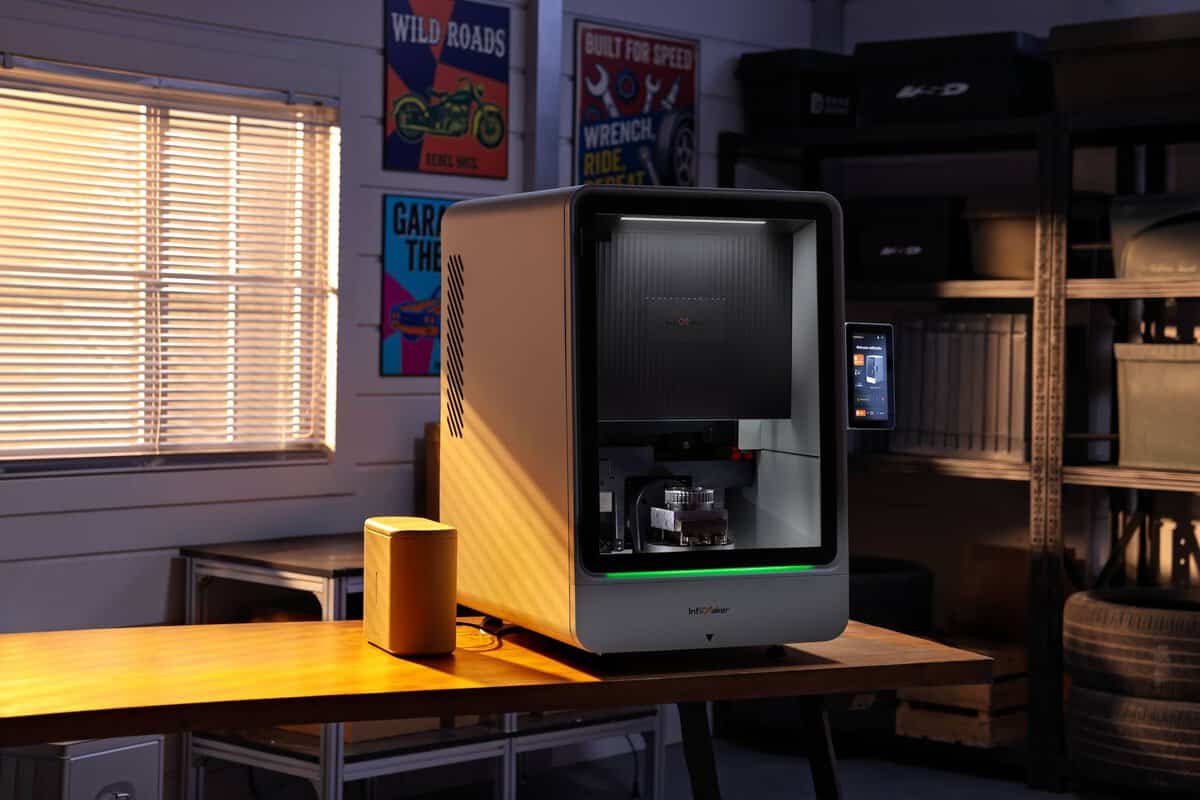
The desktop manufacturing industry has already demonstrated how lowering barriers can reshape the market. Whether desktop 5-axis CNC approaches a similar inflection point to the one 3D printing experienced will depend on hardware specifications, software, workflow automation, and ease of operation.
Infimaker believes the future of desktop manufacturing isn't just about smaller machines. It's about making advanced technology much easier to use. According to the company, the K1 production validation has already been completed, with shipments expected to begin in the Q3 of 2026 if the campaign proceeds as planned.


