



QinetiQ, the UK-based integrated defence and security company, has completed what is believed to be the world's first flight of 3D printed titanium aircraft parts manufactured from recycled material, in partnership with Additive Manufacturing Solutions Limited (AMS Ltd.). The maiden flight took place at MOD Boscombe Down in Wiltshire and involved a structural hinge component produced using titanium recovered from a decommissioned aircraft.
The milestone signals a potential shift in how aerospace supply chains source critical metals, with implications for both defence readiness and environmental sustainability.
Are 3D Printed Titanium Aircraft Parts Flight-Safe?
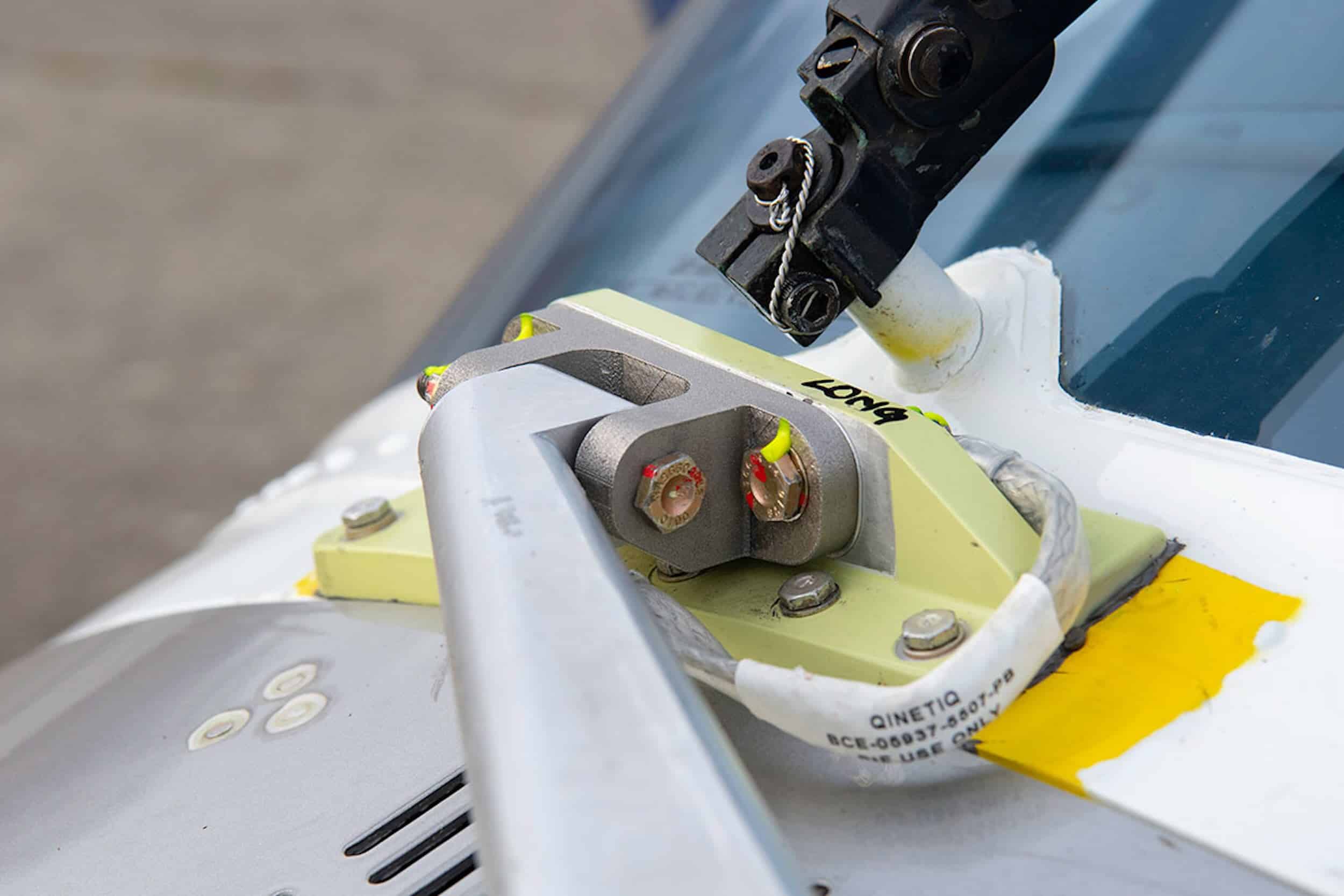
The flight, conducted by QinetiQ's Flight Test Organisation, tested a hinge forming part of an Air Data Boom fitted to a QinetiQ-owned A109S helicopter being developed for the Empire Test Pilots' School (ETPS). QinetiQ designed and integrated the component, while AMS Ltd. manufactured it using laser powder bed fusion (LPBF), an additive manufacturing process that fuses metallic powder layer by layer with a high-energy laser.
AMS Ltd.'s proprietary recycling process converts scrap titanium from retired aircraft into powder that meets aerospace-grade quality standards. The process achieves 97% material efficiency, minimising waste, and generates 93.5% fewer CO₂e emissions compared with conventional titanium supply chains. Early results indicate the recycled-titanium 3D-printed part demonstrated the performance characteristics required for structural aerospace applications, though full certification and long-term fatigue validation remain essential steps. The aerospace sector has prior precedent here: in 2022, Lufthansa Technik and Premium AEROTEC secured EASA approval for the first load-bearing 3D printed metal spare part for a V2500 engine component, also produced via LPBF.
Reducing UK Dependency on Imported Titanium
Titanium is widely used across defence platforms due to its high strength-to-weight ratio and corrosion resistance. Global demand for aerospace-grade titanium has risen in recent years, driven by urbanisation and infrastructure development, with China and Russia currently serving as the largest international suppliers. This concentration of supply has raised strategic concerns in Western defence circles.
The approach adopted by QinetiQ and AMS Ltd. offers a route toward a circular aerospace supply chain. If 3D printed titanium aircraft parts can be reliably produced from domestic scrap, AMS Ltd. estimates the UK could become self-sufficient in aerospace-grade titanium, provided material held in decommissioned aircraft were systematically extracted and recycled.
"Our testing and engineering expertise is helping to prove the technology which will reduce the UK's dependency on other nations for aerospace grade titanium. Not only are we helping to strengthen UK supply chains, we are also leading the rest of the world in the very latest 3D printing technology."
— Simon Galt, Managing Director Air, QinetiQ
Building on Innovate UK-Funded Research
The flight builds on an Innovate UK-funded project led by AMS Ltd. in 2023, which examined the feasibility of using recycled metallic materials in additive manufacturing to support a high-value circular economy for the aerospace sector. That same year, AMS Ltd.(founded in 2017 and based in West Lancashire) began working with the UK Ministry of Defence's Defence Equipment & Support division to explore recovering critical materials from surplus defence assets.
"AMS has tirelessly built momentum and expertise within the additive powder market, with a sharp focus on providing recycled feedstocks. This milestone reflects the dedication of our team and QinetiQ's commitment to a more resilient and sustainable future."
— Rob Higham, Director and CEO, AMS Ltd.
Implications for Aerospace Supply Chains
The successful flight of 3D printed titanium aircraft parts from recycled feedstock marks a concrete step toward supply-chain resilience in UK defence manufacturing. While regulatory certification and fatigue-life testing remain ahead (an area where initiatives such as SAE International and Norsk Titanium's development of the first DED additive manufacturing specifications have begun laying the groundwork) the demonstration validates the technical premise that recycled titanium can meet structural aerospace requirements when processed through advanced additive manufacturing. As demand for critical metals intensifies globally, the approach may offer a blueprint for nations seeking to reduce reliance on concentrated foreign supply chains.


