



Spacetime 4D, a Kerala-based additive manufacturing startup founded in 2020, has delivered the Akasha300 3D printer to the Indian Space Research Organisation's (ISRO) Liquid Propulsion Systems Centre (LPSC) in Valiyamala. The industrial-grade, high-temperature system is designed to support rapid prototyping and advanced materials research for space and aerospace applications, marking a significant step forward for indigenous space manufacturing in India.
The deployment strengthens ISRO's in-house capacity for producing complex aerospace components using additive manufacturing techniques, reducing reliance on imported equipment and aligning with the country's broader self-reliance objectives.
Inside the Akasha300 3D Printer
Standard industrial 3D printers are generally limited to low-temperature thermoplastics and single-material workflows, making them unsuitable for the demanding thermal and structural requirements of aerospace components. The Akasha300 3D printer is a high-temperature, multi-material extrusion system engineered for complex engineering applications that fall beyond the reach of conventional desktop or even standard industrial 3D printers. At its core is a dual-extrusion architecture capable of operating at nozzle temperatures up to 350°C, with planned upgrades extending this to 550°C. This enables the simultaneous printing of two distinct materials, for instance, a high-strength polymer paired with a soluble support material for intricate geometries.
The system also incorporates a heated build platform reaching 110°C (upgradeable to 150°C) and an enclosed, temperature-controlled chamber maintaining up to 80°C. Together, these thermal controls ensure dimensional stability and structural precision when processing high-performance thermoplastics. Integrated air filtration and a robust motion system round out the platform's industrial-grade credentials.
Advanced Materials for Aerospace Applications
A defining capability of the Akasha300 3D printer is its compatibility with engineering-grade materials typically reserved for demanding aerospace environments. The system supports polymers such as PEEK (Polyether Ether Ketone) and PEKK, both valued for their high strength-to-weight ratio and thermal resistance, properties essential for components exposed to the extreme conditions of space..
Carbon-fibre-reinforced composites are also within the printer's material range, offering lightweight yet structurally robust alternatives to traditionally manufactured parts. For ISRO's engineers at LPSC, this opens the door to rapid iteration on propulsion system components and satellite hardware using materials that meet flight-grade performance standards.
Strengthening India's Space Manufacturing Ecosystem
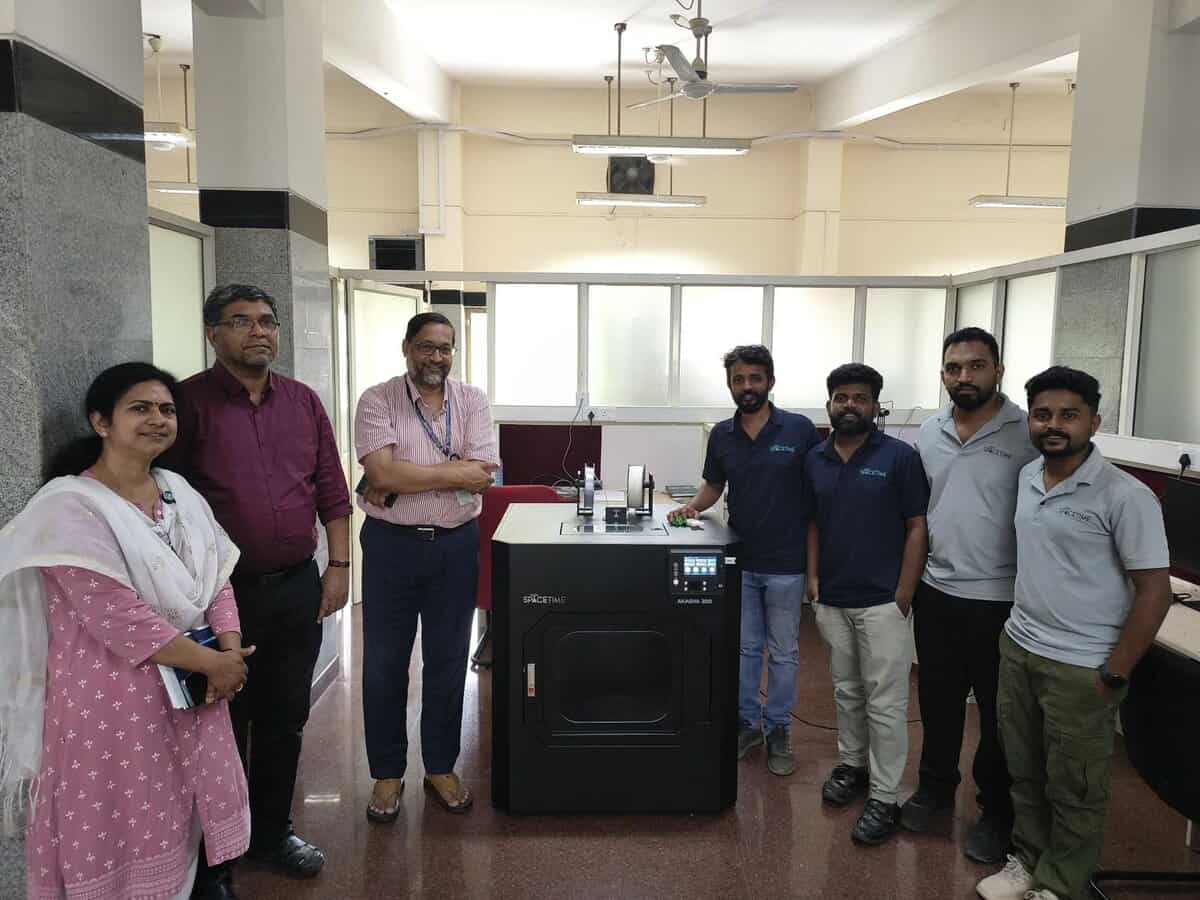
The development of the Akasha300 was supported by the Space Technology Innovation and Incubation Centre (STIIC) at the Indian Institute of Space Science and Technology (IIST) and the Kerala Startup Mission (KSUM). The collaboration underscores a growing synergy between academia, government institutions, and startups within India's space technology sector.
Positioned as a research platform rather than a production-line tool, the system enables ISRO scientists to experiment with next-generation materials and complex component designs. The shift from traditional subtractive methods, such as milling and turning, to additive manufacturing in space applications offers tangible benefits: reduced material waste, lower production costs, and significantly compressed development timelines. Engineers can now design, print, and test propulsion components in days rather than months, a trajectory already demonstrated when ISRO successfully tested its PS4 3D printed rocket engine, manufactured as a single component at LPSC using laser powder bed fusion.
High-Temperature 3D Printing in India
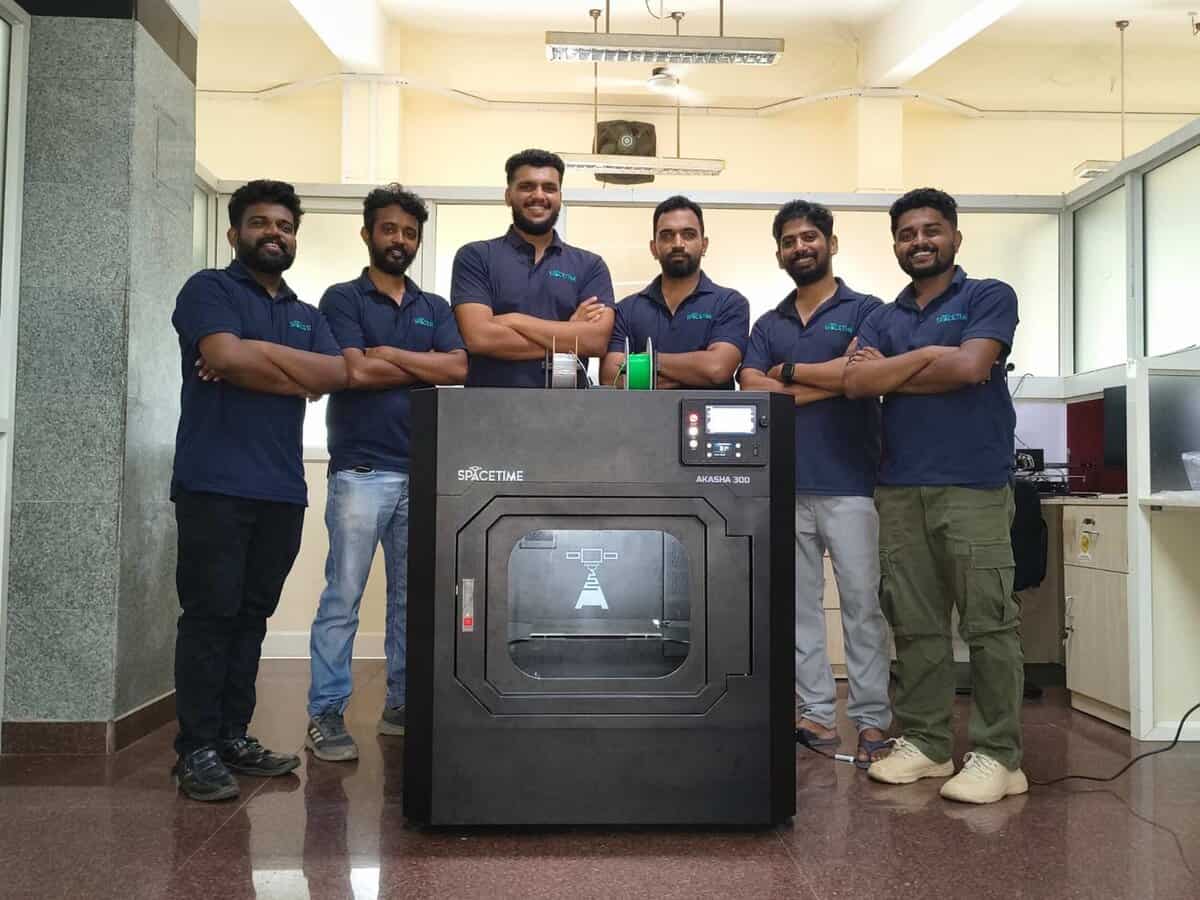
The deployment of the Akasha300 3D printer at LPSC builds on ISRO's growing investment in additive manufacturing, as the organisation previously acquired AddUp's Magic 800 DED metal 3D printer for metal component production, and arrives at a time when additive manufacturing in space is gaining traction globally. Agencies including NASA, which recently delivered multiple 3D printing research payloads to the International Space Station, and organisations such as SpaceX have integrated 3D printing into rocket engine development and satellite production workflows. India's entry into this space with an indigenously developed platform, alongside efforts such as 3D printed titanium grid fins for the Gaganyaan mission, positions the country's growing deep-tech ecosystem alongside established international players.
With continued institutional support and private-sector innovation, high-temperature 3D printing platforms such as the Akasha300 could extend beyond space applications into defence, automotive, and medical device manufacturing, sectors where India's industrial base stands to benefit from localised, advanced fabrication capabilities.


