



Divergent Technologies, a California-based digital manufacturing firm, and Mach Industries, a defence manufacturing startup founded in 2023, have announced the first flight of Venom, a 3D printed drone that moved from initial concept to flight-ready prototype in 71 days. The aircraft, described as an autonomous strike platform, was developed using an entirely digital design and additive manufacturing workflow, and its unveiling signals a notable acceleration in defence production timelines.
The 71-day development cycle positions Venom within the Pentagon's broader push for 'affordable mass': a strategic framework that prioritises fielding large numbers of relatively low-cost unmanned systems at speed. The programme appears to have visibility at senior levels within the Department of Defense, with US Secretary of Defense Pete Hegseth seen with company executives and the Venom aircraft.
Why This 3D Printed Drone Matters?
Conventional aircraft manufacturing typically requires assembling airframes from hundreds of individually machined parts, each demanding its own design-specific tooling. This process is capital-intensive, slow to scale, and difficult to iterate on; a single design change can cascade into retooling delays across the entire production line. For defence programmes operating under urgent timelines, these constraints pose a significant bottleneck.
A 3D printed drone bypasses much of this complexity. Rather than assembling an airframe from discrete components, the structure is built primarily through additive manufacturing as a series of large, unified sections. In Venom's case, Divergent Technologies used its proprietary Divergent Adaptive Production System (DAPS™) to produce the aircraft's wings, fuselage, skins, and control surfaces as monolithic 3D printed airframe assemblies: single printed structures replacing what would traditionally require hundreds of individual parts.
The result is a drastically reduced part count, no design-specific tooling, and significantly lower upfront capital expenditure, an advantage already being explored by other defence-focused partnerships leveraging 3D printing for drone manufacturing. The manufacturing workflow sends optimised design instructions directly to industrial 3D printers, and the printed structures are then assembled through a universal robotic process.
Going from inception to flight in 71 days is a clear demonstration of what's possible when DAPS™ is utilised from day one. This is what production at the speed of relevance looks like.
— Lukas Czinger, Co-Founder and CEO, Divergent Technologies
Software-Defined Manufacturing Drives the Timeline
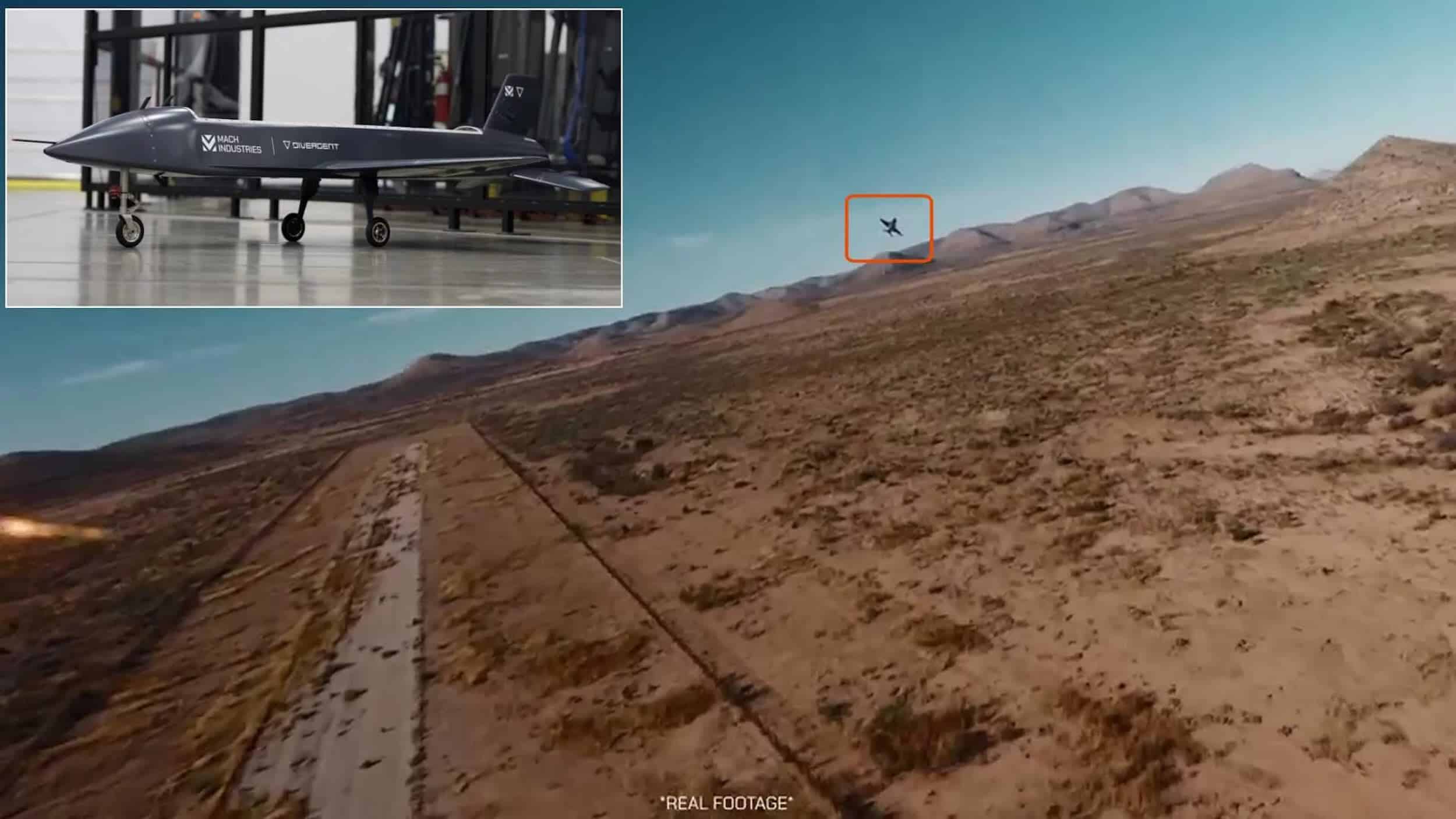
Mach Industries led the system architecture and integration for Venom, establishing baseline requirements and leveraging avionics and simulation drawn from existing flight-proven technology. The company implemented a modular, open-systems architecture that enabled parallel development and accelerated validation across hardware and software.
This software-defined manufacturing approach, where digital design, simulation, and additive production replace tooling-heavy aerospace processes, is central to the speed the two firms achieved. Mach states that over the past 18 months, it has taken four products from concept to flight test through rapid iteration, attributing part of that pace to Divergent's adaptive digital manufacturing stack.
"Mach's selection for a production contract is the first of many opportunities to show not only speed to prototype, but speed to scaled manufacturing."
— Ethan Thornton, Founder and CEO, Mach Industries
Affordable Mass Drones and Defence Strategy
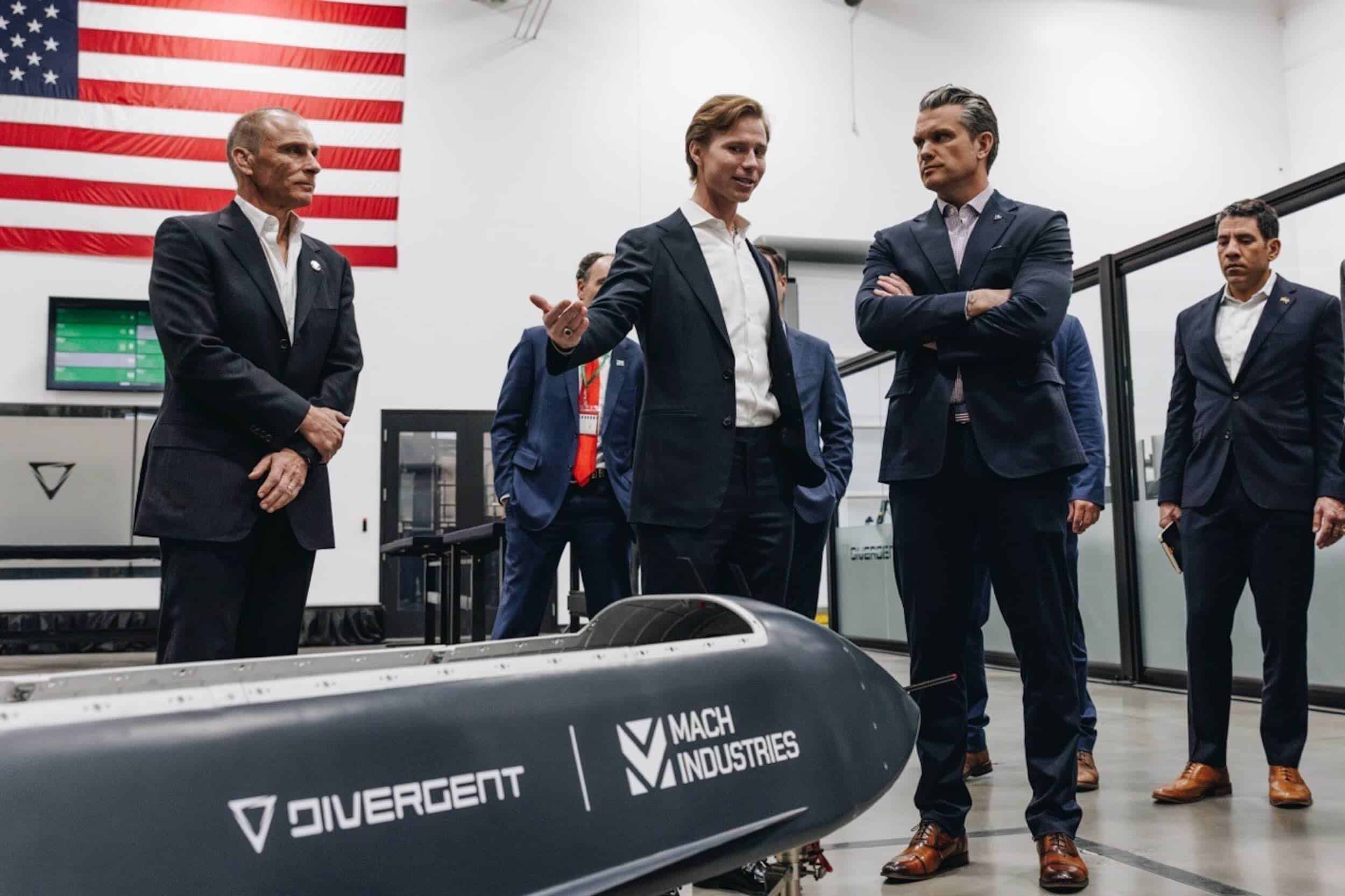
Senior defence official Alex Lovett, Principal Deputy Assistant Secretary of War for Mission Capabilities, described the collaboration as "a direct enabler" of the strategy to achieve affordable mass and support the 'Drone Dominance' vision. The framing reflects lessons drawn from recent conflicts, particularly in Ukraine, where inexpensive drones have forced militaries to reconsider how they structure air defence and offensive operations, a reality now underscored by the ongoing US–Iran conflict, where waves of Iranian one-way attack drones and ballistic missiles targeting military bases and civilian infrastructure across the Gulf have further demonstrated the strategic impact of low-cost unmanned systems at scale.
Divergent states that it plans to produce thousands of airframes annually using its additive manufacturing infrastructure, while Mach has indicated it recently secured a production contract, though neither the customer nor the contract value has been disclosed.Neither company has released detailed performance specifications for the 3D printed drone, including range, payload, endurance, autonomy architecture, or projected unit cost. Whether Venom transitions from prototype to fielded system will depend on these undisclosed parameters. For now, the 71-day timeline from concept to first flight marks a concrete data point in the growing case for additive manufacturing as a strategic defence capability, and a signal that the era of the 3D printed drone may be arriving faster than traditional aerospace timelines would suggest.


