



Throughout history, extreme pressure has driven humanity's most remarkable technological leaps. When survival is on the line and conventional solutions fall short, innovation happens at unprecedented speed. Could the Ukraine-Russia war accelerating 3D printing innovation be the latest chapter in this pattern of wartime technological evolution?
What does the mass-production of Penicillin, the Manhattan Project and the Apollo 13 rescue have in common? Each represents a moment when humanity, backed against a wall, achieved in months what might have taken decades.
- Look at penicillin. Discovered in 1928, it was just a lab curiosity project until WWII. With around 10,000 soldier casualties daily, governments got serious. Result? Production jumped from treating one patient to 15 million people in just three years.
- The Manhattan Project compressed decades of nuclear research into three frantic years because the alternative was letting Nazi Germany get there first.
- When Apollo 13's oxygen tank exploded 200,000 miles from Earth, NASA engineers cobbled together air filters from spare parts and plastic bags in hours, not months such development would normally take.
This is what makes the ongoing Ukraine-Russia war an interesting case study to observe whether this will also lead to rapid hardware, material and software innovation of the 3D printing technology. While the three examples in the premise might have more stakes on the line but Ukraine war is no less and it’s a conflict that has already resulted in more than a million casualties (till mid-September 2024).
When the stakes get impossibly high, innovation accelerates to breakneck speed. And this is exactly what might happen for 3D printing. For tech leaders watching this space, this isn't just a military story—it also is a technology story and might lay a path for some eventual innovations to come in 3D printing.
The Ultimate Testing Ground
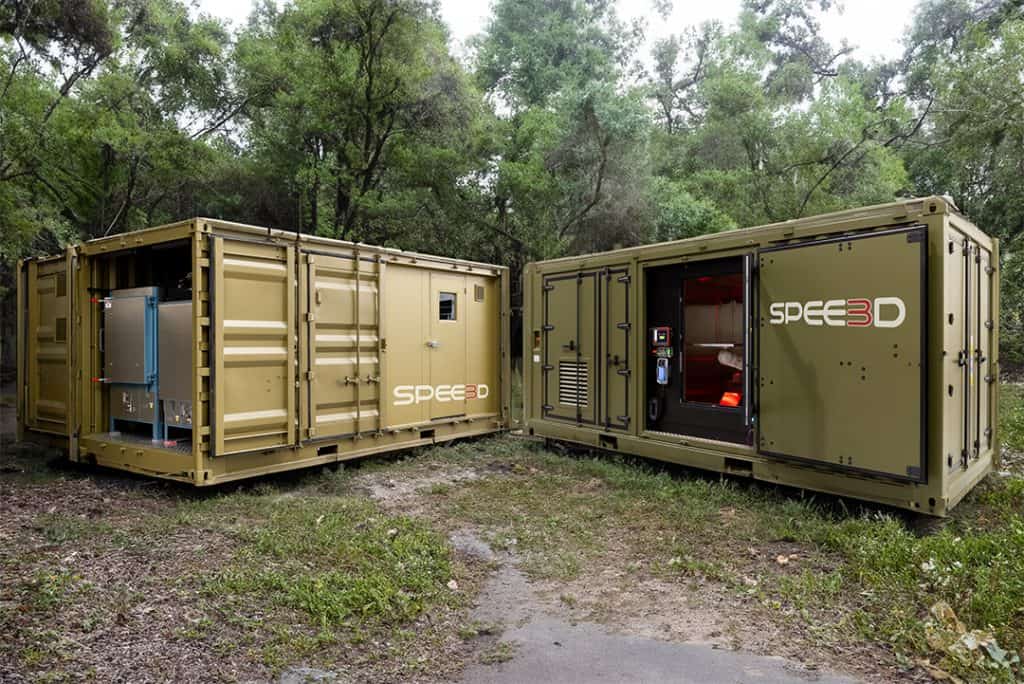
Ukraine has become the world's most extreme product testing environment for 3D printing. Before this war, the technology was maturing steadily in controlled environments – aerospace, healthcare, automotive. But the battlefield? That's different. There's no climate control, no technical support team, no time for careful calibration. Either the tech has to work, or people’s lives are on the line.
Metal cold spray systems from SPEE3D and Titomic are deployed right near the front lines, getting shaken by artillery and operated by soldiers who probably didn’t even know about 3D printing just six months ago. These WarpSPEE3D printers are making metal parts without lasers or special gases – crucial when you're in a forward operating position and conventional manufacturing is impossible.
On the surface, the Royal Netherlands Army donated ten Titomic D523 systems to Ukraine but they have made a strategic investment in field testing. Every successful print, every repair, every failure is generating priceless data on how these systems perform when lives depend on them. No R&D lab on earth could replicate these conditions.
“We just finally last month got [Ukraine] these industrial-size 3D printers. And this last week, we trained them on it… I mean, we’re talking like a truck size that the Ukrainians have finished training on. It’s going right in theater and they’re printing all their [own] repair parts.”
- William LaPlante, US DoD (Department of Defence) Assistant Secretary of Defence for Acquisition
What's emerging from this crucible of innovation is a rapid evolution in how military equipment is maintained in conflict zones. Take the case of battlefield maintenance for armoured vehicles. When a tank needs replacement components in Ukraine, traditional supply chains might take weeks. The UK Ministry of Defence's contract with Babcock is proving a concept that could transform military logistics globally – creating digital inventories of critical components that can be manufactured on demand, right where they're needed.
The war is also accelerating innovation in specialized materials processing. Engineers are developing new techniques for working with high-performance materials like tungsten alloys and specialized steels that can withstand extreme battlefield conditions. These advancements have direct applications beyond defence – the same materials being tested for drone components could revolutionize everything from medical implants to aerospace parts.
This extends beyond just metal printing. Forward operating bases are testing emergency manufacturing capabilities for everything from communications equipment housings to medical supplies. What's fascinating is the cross-pollination happening with civilian applications – the same techniques being developed to repair battlefield damage are directly applicable to maintaining remote infrastructure like offshore wind turbines or oil platforms.
The conflict is creating opportunities in what I call “Crisis-Adaptive Manufacturing” – the ability to rapidly adapt production capabilities due to crisis situation and disruptions. Several countries are already establishing digital manufacturing hubs that can quickly pivot to meet emergency needs, creating a new model of industrial readiness that wouldn't exist without the pressures of this conflict. These distributed manufacturing networks are proving remarkably effective at maintaining critical supplies even when conventional logistics are compromised.
Ukraine-Russia war accelerating 3D Printing
Drones have transformed the dynamics of the Ukraine-Russia war and 3D printing is transforming how these drones are made.
Industrial-Scale Drone Manufacturing
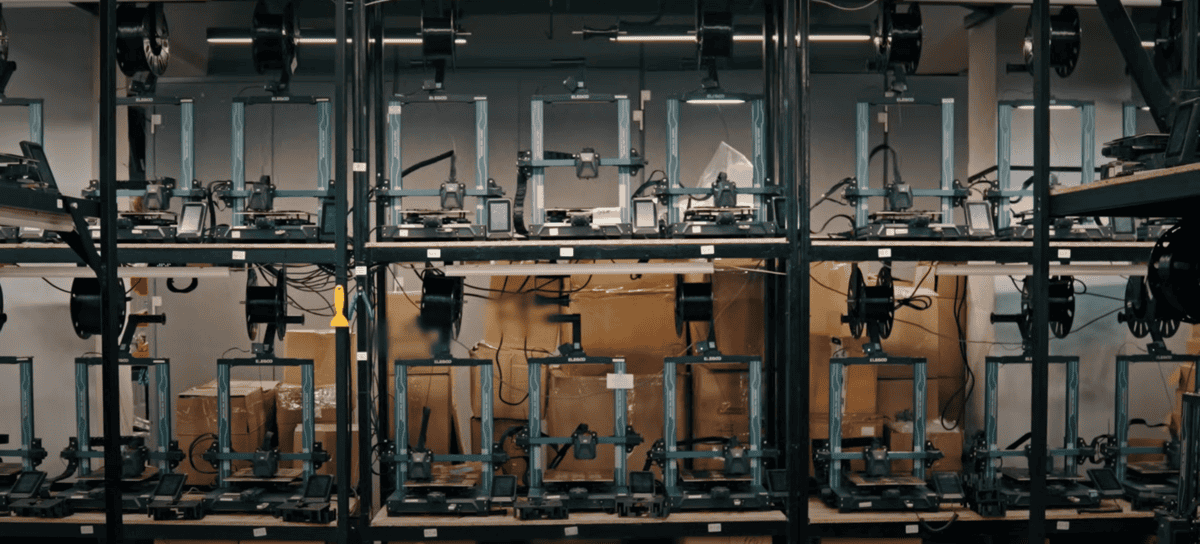
Skyfall, a Ukrainian company, has a secret drone factory running hundreds of 3D printers that churn out one drone every 23 seconds – up to 4,000 per day. They're manufacturing Vampire and Shrike FPV drones at industrial scale, and here's the kicker: when a design flaw gets exposed on the battlefield, they can implement fixes and improvements within days.
Interceptor Drones from Russia
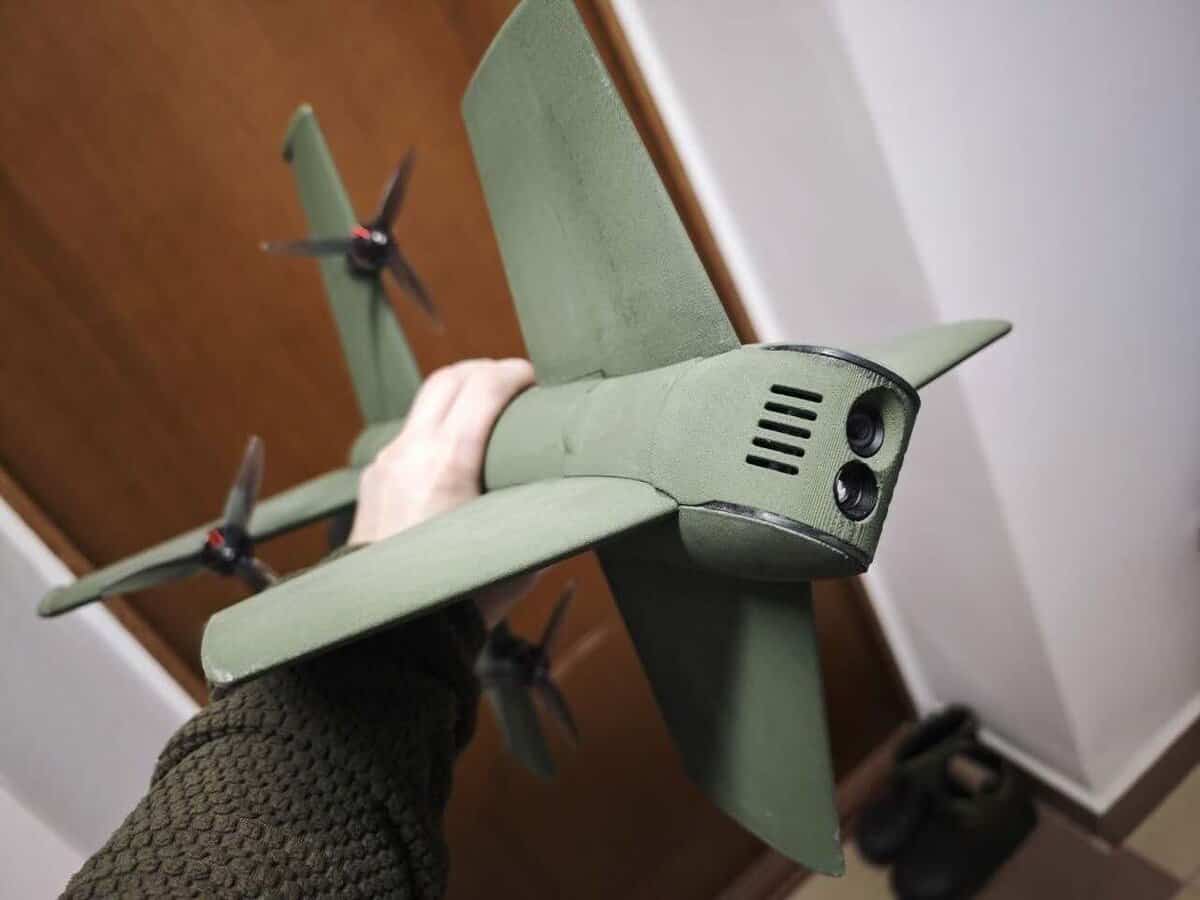
Meanwhile, Russian marines from the 155th Kursk Brigade have unveiled their own 3D printed interdiction drone with an X-shaped airframe, equipped with dual-spectral optical targeting. Both sides are now innovating and trying to outperform each other through the use of 3D printing.
Distributed Maker Network

Then there's DrukArmy (Print Army), a volunteer network with thousands of consumer-grade FDM printers scattered across Ukraine. They're printing drone components, stabilising fins for munitions, and other battle-critical supplies from apartments, garages, and makeshift workshops.
Yurii Sakhno, a contributor to the DrukArmy showcased how he 3D prints dozens of objects that help the frontlines in Ukraine. volunteers 3D print plastic casings in which the military adds the explosives and sends to the front. This allows the military to quickly get parts of ammunition often lacking on the battlefield.
Sakhno shared that in 2024 alone, the Druk Army team delivered 277 tons of 3D-printed products to the front, totalling 11 million units.
Volunteers are making use of a lot of Chinese desktop FDM 3D printers from Creality & Bambu Labs and printing with common filaments like PLA, ABS and PETG (also from China).
Spider’s Web Campaign
While it’s too early to substantially say that 3D printed drones were used in the Spider’s Web operation but observing the videos of the attack, hearing about description of the drones used, how the attack was carried out and their value, it surely looks like Vampire and Shrike FPV drones were used in the campaign that delivered the biggest loss to Russia in this war.
Ukraine used 117 cheap drones to attack multiple Russian air bases thousands of miles away from the frontline destroying $7 billion worth of military hardware including Russian bombers, AWACS and more. The Spider’s Web campaign was a military success and has shown the innovative use of cheap drones to deliver billion dollars’ worth of damage.
(I’ll update this section as more information about the drones come out in the open and I might write a separate addition to this article.)
Compressing a Decade into Months
What fascinates me most is the data collection happening. Companies would normally spend years gathering performance data, methodically testing improvements, and gradually refining their products. In Ukraine, that's happening daily or weekly.
A design flaw that might take months to surface in commercial applications becomes obvious after a day on the front lines. Solutions that would crawl through approval processes get implemented immediately because soldiers need them now.
We've seen this pattern before. WWII gave us radar, jet engines, and computer science, the Cold War accelerated space technology, and Post-9/11 conflicts drove drone development.
The difference here is how Ukraine is combining industrial-grade systems with grassroots maker approaches, creating a hybrid innovation ecosystem unlike anything we've seen before.
Not Just Weapons – Lives Are Being Saved
While combat applications grab headlines, some of the most important innovations are happening in humanitarian work. Project DIAMOnD mobilised over 300 3D printers to produce tourniquet clips for Ukrainian field medics. The Victoria Hand Project is creating custom prosthetics for war-wounded civilians and soldiers.
These applications are driving improvements in materials, design approaches, and production methods that will transform medical manufacturing long after the conflict ends.
Looking Beyond the Battlefield
The tech being field-tested in Ukraine today will reshape global manufacturing tomorrow. Those metal cold spray systems proving themselves in battlefield repairs will transform how we handle industrial maintenance. The rapid design iteration cycles for drone components will change aerospace prototyping. Materials that can withstand combat will find applications from deep sea exploration to space travel.
Though it may seem all positive, we also need to be wary that while wartime environments often catalyse innovation, they also prioritise speed over safety, sustainability and regulatory standards. Many of the advancements in Ukraine, while impressive, may face hurdles in peacetime adoption—such as rigorous certification requirements, ethical considerations, and long-term scalability. Additionally, excessive reliance on distributed manufacturing might introduce new vulnerabilities related to quality control, IP enforcement, and security.
So let us keep a watch on how the technology evolves through the war. We're witnessing a painful but profound technological leap forward – compressing what should be a decade of gradual evolution into months of intense development. Only time will tell if companies were able to leverage this opportunity to advance the technology or not.


