



The 3D printer ghost gun law proposed in California is advancing through the state legislature, with lawmakers aiming to mandate firearm-detection systems in consumer 3D printers while raising broader concerns across the additive manufacturing industry.
The legislation, formally known as California Assembly Bill 2047, has been introduced to require manufacturers and sellers of 3D printers to integrate algorithmic systems capable of detecting and blocking the production of untraceable firearms, commonly referred to as ghost guns. Introduced by Assemblymember Rebecca Bauer-Kahan, the bill represents a significant escalation in how governments may regulate additive manufacturing technologies.
Traditionally, firearm regulations have focused on controlling weapon sales, serialisation, and ownership. However, this legislation shifts the focus toward regulating the tools used to manufacture such weapons, marking a notable departure from earlier policy approaches.
3D Printer Ghost Gun Law Explained
At its core, the 3D printer ghost gun law mandates that all 3D printers sold in California must include state-approved “print-blocking software.” This software would scan digital design files and prevent the printing of components identified as firearm parts.
The bill also introduces legal penalties for users who attempt to bypass these safeguards. Specifically, it would make it a criminal offence to “knowingly disable, deactivate, uninstall, or otherwise circumvent” such blocking systems.
Supporters argue that the measure is a necessary evolution of existing firearm regulations. Ghost guns, which lack serial numbers and are difficult to trace, have already been targeted by federal and state laws, particularly amid the rise in 3D printed gun recoveries in New York.
"As gun violence continues to devastate our communities, we cannot allow 3D printing technology to become a new pipeline for untraceable weapons."
— Rebecca Bauer-Kahan, California Assembly member
Industry Groups Raise Concerns

However, the 3D printer ghost gun law has drawn sharp criticism from organisations such as the Electronic Frontier Foundation (EFF), which argues that the proposal introduces broader risks beyond its intended scope.
Critics describe the mandated software as a form of “censorware” that could restrict legitimate uses of 3D printing, including prototyping, education, and repair. The EFF has also warned that the law could criminalise open-source firmware, effectively limiting user control over devices they own.
Another major concern is the technical feasibility of the proposed system. Experts point out that 3D printers operate using G-code, a set of machine instructions that define movements and material deposition. Detecting “intent” within such code, particularly distinguishing a firearm component from a similar geometric object, remains a significant challenge.
The legislation would also require the creation of a continuously updated database of prohibited designs, overseen by state authorities. This introduces questions about scalability, accuracy, and the potential for false positives that could block legitimate prints.
Impact on Additive Manufacturing
Beyond technical challenges, the 3D printer ghost gun law could reshape the competitive landscape of the additive manufacturing industry.
Smaller manufacturers and startups may face disproportionate compliance costs, including the development or licensing of print-blocking algorithms and navigating state certification processes. According to critics, this could favour established companies with greater resources, raising barriers to entry in an otherwise accessible technology sector.
There are also concerns about ecosystem lock-in. By requiring tightly controlled software environments, manufacturers may restrict third-party tools and materials, echoing practices seen in traditional 2D printing markets. This could limit innovation and reduce flexibility for end users.
Additionally, the bill’s potential impact extends beyond California. Given the state’s market size, manufacturers may choose to standardise compliance across all regions rather than maintain separate product lines. This raises the possibility that California’s regulatory model could influence global 3D printing practices.
Rising 3D Printing Regulations
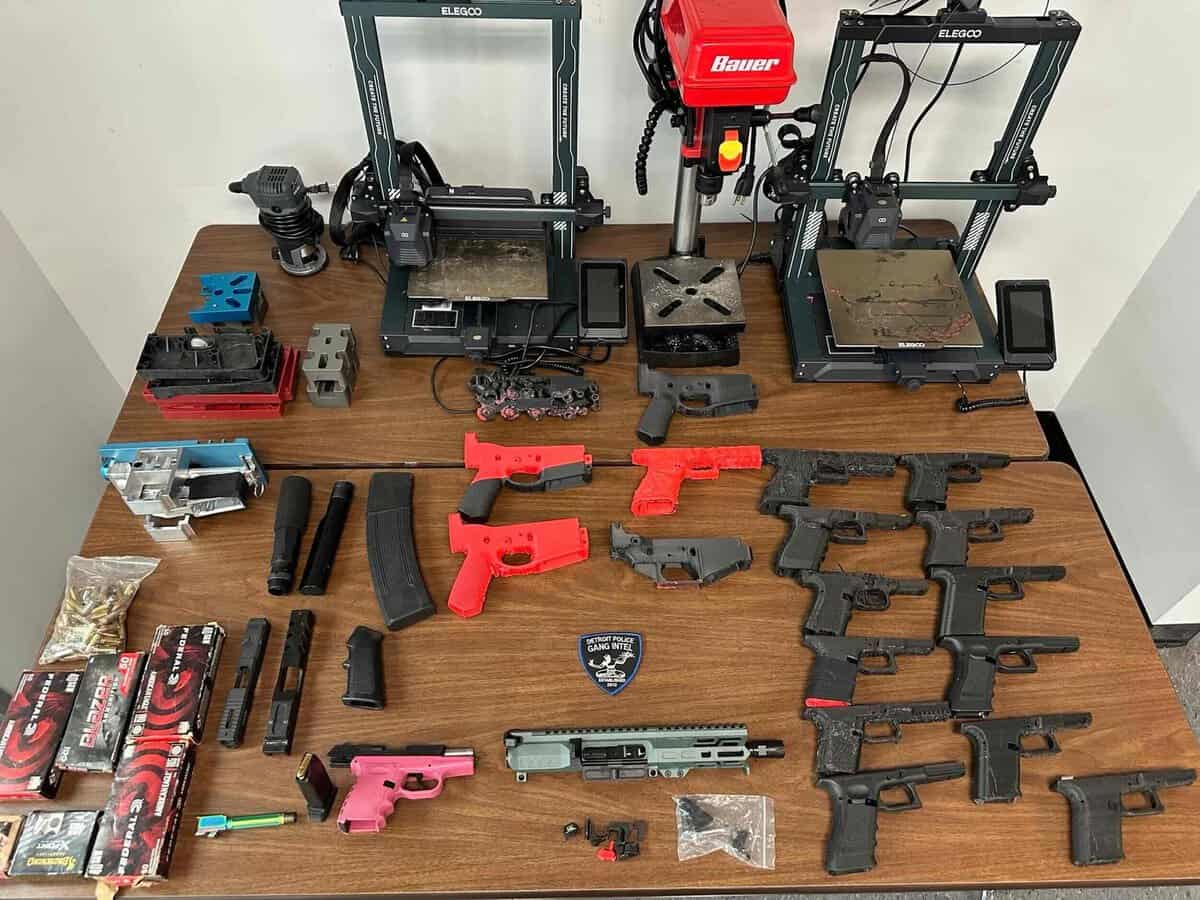
The push for the 3D printer ghost gun law is part of a wider trend across the United States, alongside emerging 3D printed gun legislation in the US.
States such as New York, Washington, and Colorado have introduced or passed measures targeting 3D printed firearms and the distribution of related digital files.
At the federal level, recent developments have moved toward treating ghost guns more like traditional firearms, including requirements for serialisation and traceability.
What distinguishes California’s approach is its focus on embedding enforcement directly into hardware and software systems, rather than solely regulating end users or distribution channels.
Regulation Meets Technical Reality
As the 3D printer ghost gun law progresses through legislative stages, it is likely to face continued scrutiny from both industry stakeholders and legal experts. Questions around technical feasibility, constitutional implications, and economic impact remain unresolved.
The bill’s next phases will determine whether California can operationalise algorithmic print blocking at scale, or whether the proposal will require significant revisions. Regardless of the outcome, the legislation signals a shift in how governments may approach the regulation of additive manufacturing technologies.
For the global 3D printing sector, the 3D printer ghost gun law represents a pivotal moment, where innovation, regulation, and digital rights intersect in increasingly complex ways.


