



Zhengtao Gan, an assistant professor of manufacturing engineering at Arizona State University (ASU), has earned a National Science Foundation Faculty Early Career Development Program (CAREER) Award for his research on improving the reliability of multi-metal additive manufacturing. The award, valued at approximately US $550,000 over five years, supports Gan's work on preventing interfacial cracks in multi-material parts: a persistent defect that limits adoption of the technology in aerospace, energy, and biomedical applications.
Why Multi-Metal Additive Manufacturing Matters
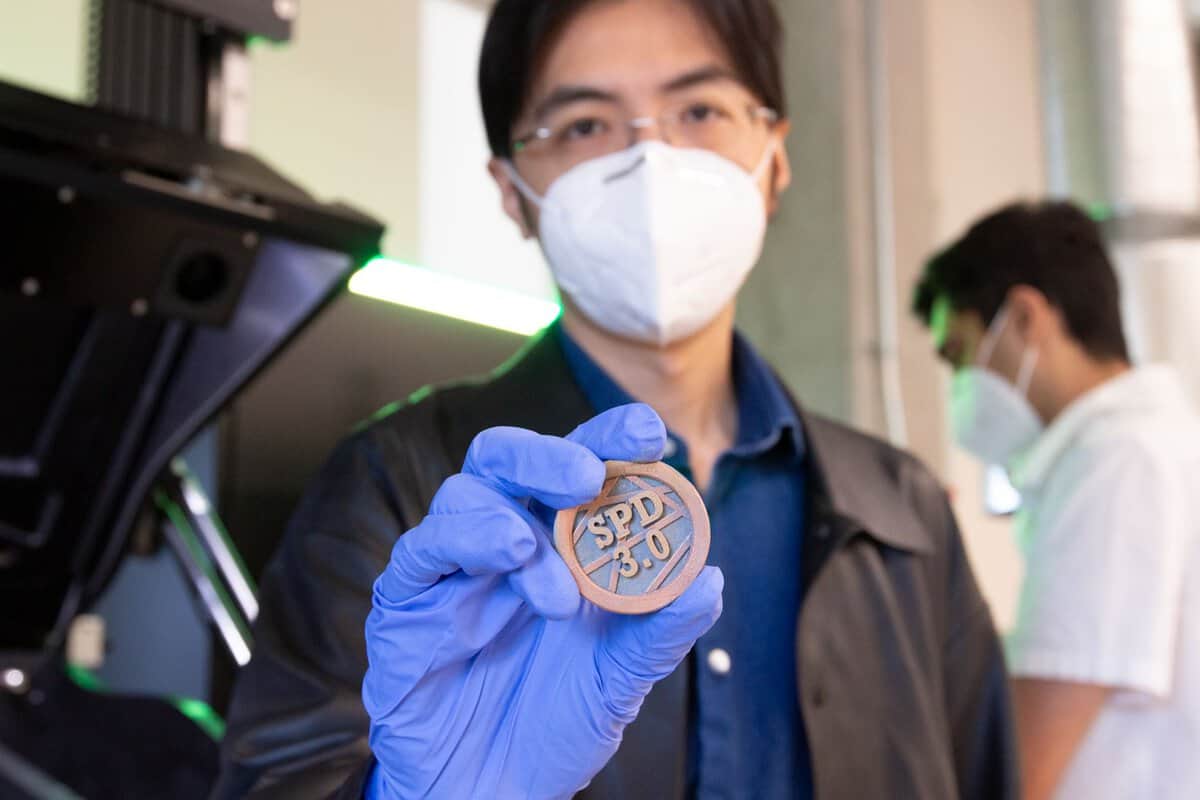
Multi-metal additive manufacturing is a process that uses technologies such as multi-material powder-bed fusion to combine two or more alloys within a single 3D-printed part. Heat-exposed regions can use thermally conductive materials such as copper, while load-bearing sections are reinforced with stronger alloys. This targeted material placement improves performance, reduces weight, and extends the lifespan of critical components.
However, this technology faces a fundamental reliability challenge. When different metals are fused together, they cool at different rates, creating temperature gradients and stress fluctuations. These thermal and mechanical mismatches often produce interfacial cracks (fractures that propagate along the boundary where dissimilar materials meet). Even microscopic defects at these junctions can compromise performance in high-stakes systems.
"Multi-metal additive manufacturing is a new technology that will shape the whole field."
— Zhengtao Gan, Assistant Professor of Manufacturing Engineering, ASU
Predictive Models Tackle Printing Defects
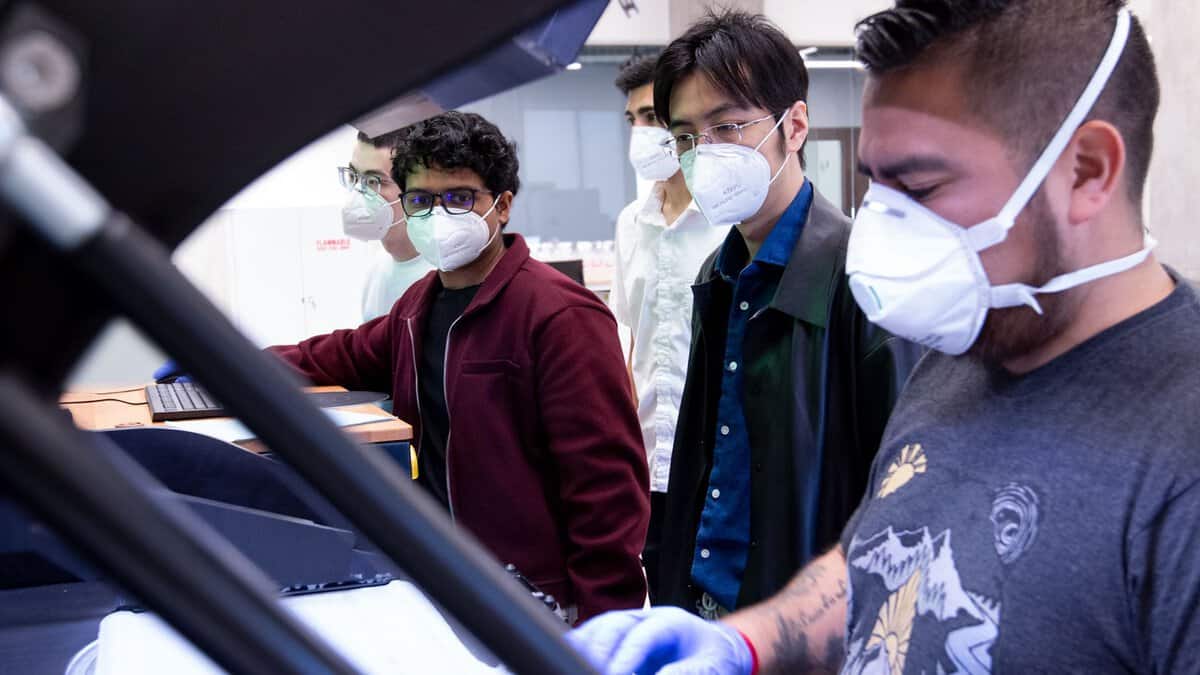
Gan's research moves away from trial-and-error fabrication towards predictive, physics-informed design. Rather than printing parts and inspecting them for failures after the fact, his approach integrates multiple scientific frameworks into a single predictive manufacturing model.
Heat and mass transport models track how temperature and material composition evolve during printing. Crystal plasticity describes how the internal grain structure of metals deforms under stress. Fracture mechanics then determine when those stresses become high enough to initiate cracks. By coupling these thermal, mechanical, and chemical effects, the model can simulate how stresses build, how brittle phases form, and whether a structure will fail, before a single part is printed.
Gan and his collaborators validate these simulations using synchrotron X-ray imaging, which allows them to observe materials in real time during processing. These high-resolution techniques reveal how intermetallic layers grow and how cracks begin, providing experimental evidence that strengthens the model's accuracy.
From Aerospace to Energy: Real-World Applications
Solving interfacial cracking could significantly expand the practical applications of multi-metal additive manufacturing. In aerospace, combining copper's thermal conductivity with steel's structural strength enables rocket components that manage heat more efficiently without sacrificing durability. In energy systems, integrating conductive and magnetic materials can improve motor efficiency and thermal control. Biomedical devices and electronics stand to benefit as well.
"This research represents the kind of convergence ASU is uniquely positioned to lead, where advanced manufacturing, materials science and AI work together to solve foundational challenges."
— Binil Starly, School Director and Professor, School of Manufacturing Systems and Networks, ASU
Multi-Metal vs Traditional Manufacturing Approaches
Traditional methods such as dissimilar metal welding and mechanical assembly have long been used to join different metals, but these approaches carry their own limitations in precision, weight, and design complexity. Multi-metal 3D printing offers greater design freedom by enabling material transitions within a single build, though its adoption has been constrained by reliability concerns: particularly the risk of interfacial cracking.
Gan's predictive framework aims to close this gap. By allowing engineers to evaluate material combinations and processing conditions computationally, the model keeps crack-driving forces below the material's resistance threshold, preventing failure rather than reacting to it. The role of AI in additive manufacturing is central to this shift, as machine learning and simulation tools accelerate the transition from experimental trial runs to informed, data-driven decisions.
Alongside his research, Gan is also developing a forensic learning approach to engineering education, where students analyse simulated manufacturing failures to identify root causes and apply core principles. The CAREER Award project acknowledges support from the Advanced Manufacturing Initiative at the National Synchrotron Light Source II at Brookhaven National Laboratory.


