



General Upendra Dwivedi, Chief of the Army Staff (COAS), inaugurated 'Agnishodh', the Indian Army Research Cell (IARC) at the Indian Institute of Technology (IIT) Madras campus. This research facility, which will prioritise advanced manufacturing technologies including advance 3D printing for defence applications. It marks a watershed moment for both the Indian defence sector and the domestic additive manufacturing industry.
The inauguration took place during the COAS's two-day visit to Chennai and advances one of the Five Pillars of Transformation articulated by General Dwivedi - Modernisation and Technology Infusion. Agnishodh represents the Indian Army's commitment to integrating cutting-edge manufacturing capabilities with battlefield requirements, creating new opportunities for collaboration between the military and India's growing additive manufacturing ecosystem.
Agnishodh Research Cell
The Agnishodh research facility will place additive manufacturing at the forefront of India's defence technology development strategy. The collaboration extends into the IIT Madras Research Park, where the cell will work alongside the Advanced Manufacturing Technology Development Centre (AMTDC) and Pravartak Technologies Foundation to convert lab-scale 3D printing innovations into field-ready defence applications.
This partnership comes at a critical time for India's additive manufacturing sector, which has seen significant growth but limited defence applications until now. By establishing dedicated research infrastructure at IIT Madras, the Indian Army is creating a pathway for domestic AM companies to participate in defence projects, potentially opening new market opportunities for materials suppliers, 3D printer manufacturers, and service bureaus across India.
General Dwivedi highlighted existing initiatives like Project SAMBHAV and additive manufacturing partnerships with Army Base Workshops that are already setting new benchmarks in defence manufacturing. These projects demonstrate the Indian Army's recognition of AM's potential to solve complex supply chain challenges, particularly for spare parts and rapid prototyping of tactical equipment. The AGNISHODH cell will further accelerate these applications while developing new use cases specifically tailored to India's operational requirements.
3D Printing for Defence Applications
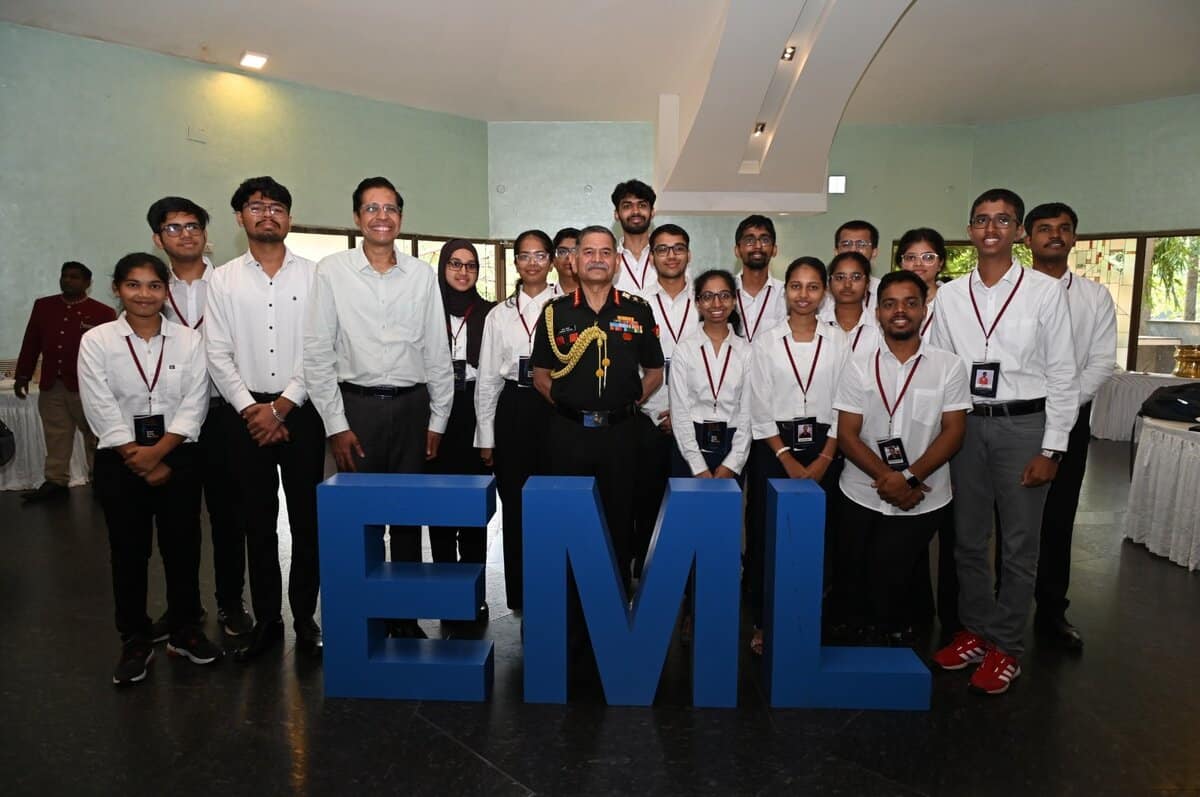
A key component of the Agnishodh initiative will be developing in-house additive manufacturing capabilities within the armed forces. The cell will focus on upskilling military personnel in 3D printing technologies alongside other emerging fields such as cybersecurity, quantum computing, wireless communication, and unmanned aerial systems.
This training program has significant implications for India's additive manufacturing industry, as it will create a cadre of military experts familiar with AM technologies who can serve as future customers, collaborators, and potentially even industry leaders after their service. The program also signals a long-term commitment to additive manufacturing as a core capability rather than a temporary technological interest.
Industry analysts note that military adoption of additive manufacturing technologies often accelerates wider industrial adoption by validating use cases and demonstrating return on investment. By establishing formal training programs through Agnishodh, the Indian Army is creating both immediate demand for AM solutions and building the foundation for sustained market growth. Local manufacturers of 3D printers and materials may find new opportunities to develop military-specific products tailored to the requirements identified through this initiative.
Strategic Impact of AM
During his visit, General Dwivedi addressed a gathering at IIT Madras on "Operation Sindoor – A New Chapter in India's Fight Against Terrorism," describing it as a landmark intelligence-driven response that redefined India's counter-terrorism doctrine. While not directly referencing additive manufacturing in this context, military experts note that the speed and adaptability demonstrated in the 88-hour operation align perfectly with the capabilities that advanced manufacturing technologies can provide.
The COAS highlighted that future conflicts would demand a blend of conventional strength and modern capabilities, where "boots must share space with bots." This perspective reflects the growing importance of rapid manufacturing capabilities in the field, where 3D printing can enable on-demand production of critical components, repair parts, or even customised equipment for specific mission requirements.
For India's additive manufacturing industry, the broader implications of Agnishodh extend beyond direct defence contracts. The research cell represents a national commitment to "Swadeshikaran Se Sashaktikaran" (Strengthening through Indigenisation), creating opportunities for domestic AM companies to contribute to India's strategic capabilities. This shift towards indigenous production aligns with global trends where additive manufacturing is increasingly viewed as a critical technology for national security and supply chain resilience.
General Dwivedi also visited the Officers Training Academy (OTA) in Chennai during his tour, where future military leaders are being prepared for contemporary challenges. The incorporation of additive manufacturing knowledge into officer training further signals the technology's long-term importance in India's defence strategy, potentially creating a generation of military leaders who understand and value advanced manufacturing capabilities.


