



Researchers at the University of Mississippi have developed a 3D printed cancer drug delivery system that uses implantable nanocarriers to release chemotherapy directly at tumour sites, in a study published in Pharmaceutical Research. The lab-based work demonstrates that microscopic carriers known as spanlastics, embedded within 3D printed alginate hydrogels, can deliver doxorubicin to breast cancer cells while limiting the systemic exposure that drives chemotherapy's harshest side effects.
3D Printed Cancer Drug Delivery Explained
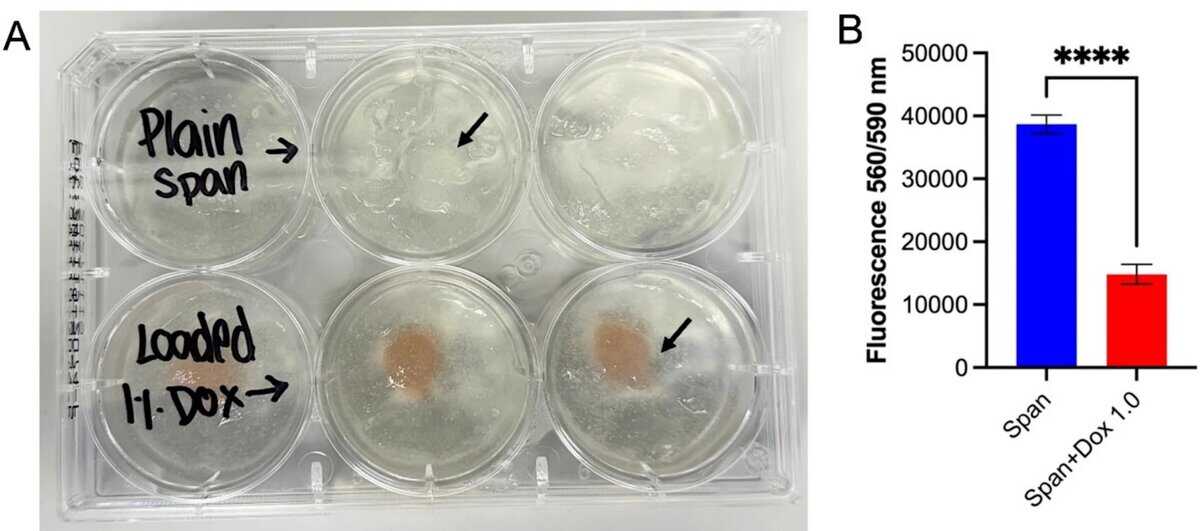
3D printed cancer drug delivery uses implantable nanocarriers, such as spanlastics, to release chemotherapy drugs directly at tumour sites, improving precision and reducing damage to healthy cells compared with traditional systemic treatments. The Ole Miss team built its depots using Freeform Reversible Embedding of Suspended Hydrogels, or FRESH 3D printing, a technique that extrudes soft hydrogel inks inside a granular gelatin support bath before the support is gently liquefied to release the finished construct. The approach draws on the broader principles of 3D bioprinting, where soft biomaterials are layered within a supportive hydrogel matrix.
The low-temperature, shear-managed environment of FRESH 3D printing is critical because it preserves the integrity of the spanlastic vesicles during fabrication. Each vesicle measures between 200 and 300 nanometres, small enough to cross cell membranes and deposit a concentrated dose of medication inside cancer cells.
"This paper introduced a new 3D printing concept called FRESH 3D printing. It uses spanlastics as a new nano-drug delivery vehicle for anticancer drug delivery. We actually applied this on breast cancer cells and we got some really, really promising data."
— Mo Maniruzzaman, Chair and Professor of Pharmaceutics and Drug Delivery, University of Mississippi
Why Spanlastic Nanocarriers Matter
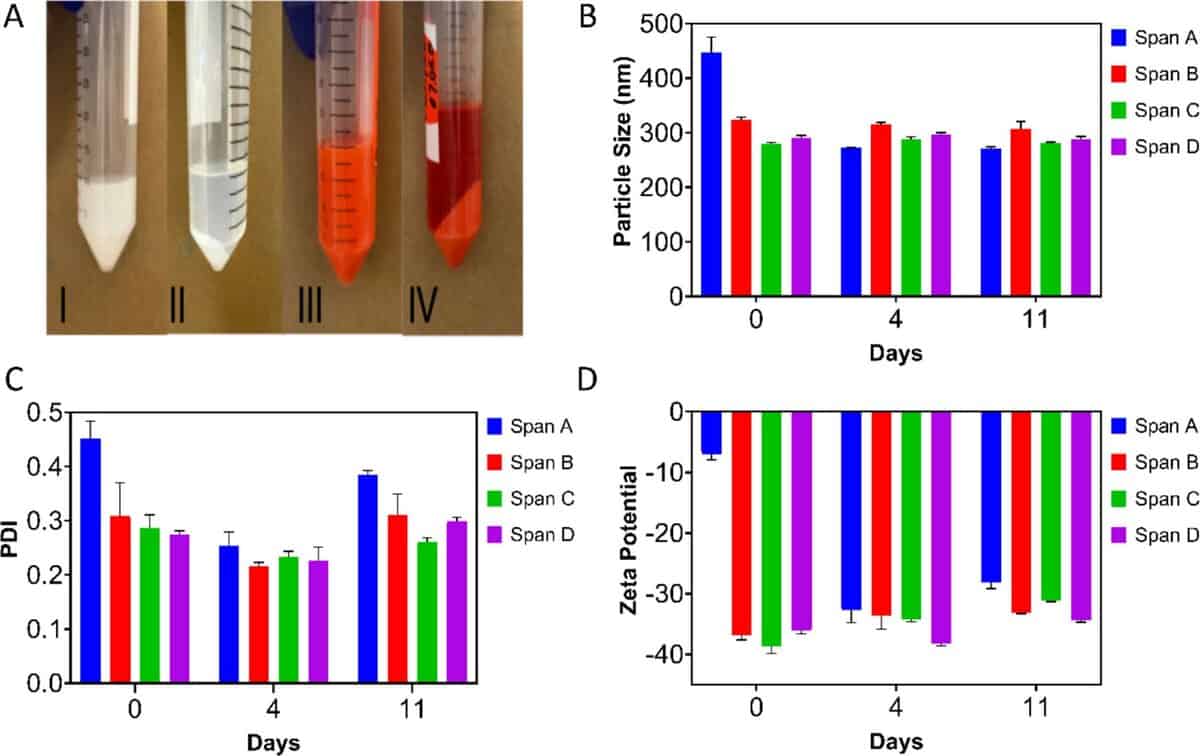
Spanlastics are ultra-deformable vesicles made from a nonionic surfactant such as Span 60 paired with an edge activator like Tween 80. The edge activator increases bilayer elasticity, which helps the vesicles slip across biological barriers and resist efflux mechanisms that often blunt conventional chemotherapy. In the Ole Miss study, optimised formulations achieved encapsulation efficiencies of 33 to 44 per cent and remained stable through the printing process.
Embedding these vesicles inside a printed alginate matrix introduces a second layer of control. The printed depots produced sustained doxorubicin release relative to a free suspension, reduced MCF7 breast cancer cell viability, and showed preferential intracellular and nuclear localisation, consistent with how doxorubicin acts on tumour DNA.
"Delivering chemotherapeutics is always a nasty business because of the severe side effects that the patients experience. The goal of this publication is how we can minimise those side effects."
— Jaidev Chakka, Principal Scientist, School of Pharmacy, University of Mississippi
Targeted Chemotherapy Delivery and Early-Stage Cancer
Conventional chemotherapy circulates throughout the body, attacking fast-dividing cells in hair follicles, the intestinal lining, and skin alongside the tumour, which is why patients often experience hair loss, nausea, and anaemia. By concentrating the drug at the tumour, targeted chemotherapy delivery aims to spare healthy tissue. The researchers suggest the approach could be particularly useful in early-stage diagnoses, before metastasis takes hold and a localised depot still has a meaningful therapeutic window.
The work also sits alongside other localised delivery strategies under investigation, including liposomal carriers and hydrogel-encapsulated natural killer cell implants explored through 3D bioprinting, though direct head-to-head comparisons remain outside the scope of the current paper.
Next Steps Toward Clinical Validation
The team is clear that the findings, while encouraging, are an early step. The current data are drawn entirely from in vitro experiments using MCF7 breast cancer cells, and in vivo animal studies — alongside more advanced tumour models such as 3D bioprinted tumour constructs that better mimic the clinical microenvironment — will be required before any clinical pathway can be charted. Questions around manufacturing scalability, regulatory approval, and cost in real-world healthcare settings also remain unanswered.
For now, the University of Mississippi study establishes that 3D printed cancer drug delivery using spanlastic-loaded FRESH printed alginate implants is technically feasible and biologically active against breast cancer cells in the laboratory, providing a foundation for the in vivo validation work that must follow.


