



University of South China, a public research university in Hunan Province, has developed a new class of AI-designed steel for 3D printing in collaboration with Purdue University. The new alloy achieves ultra-high strength and ductility while reducing material costs and cutting heat treatment time to a single six-hour step, a fraction of what conventional high-performance steels require.
The study, published in the International Journal of Extreme Manufacturing on March 31, 2026, demonstrates that integrating artificial intelligence with the fundamental physicochemical properties of elements can rapidly identify optimal alloy compositions, addressing a persistent bottleneck in heavy manufacturing and aerospace engineering.
Developing AI-Designed Steel for 3D Printing
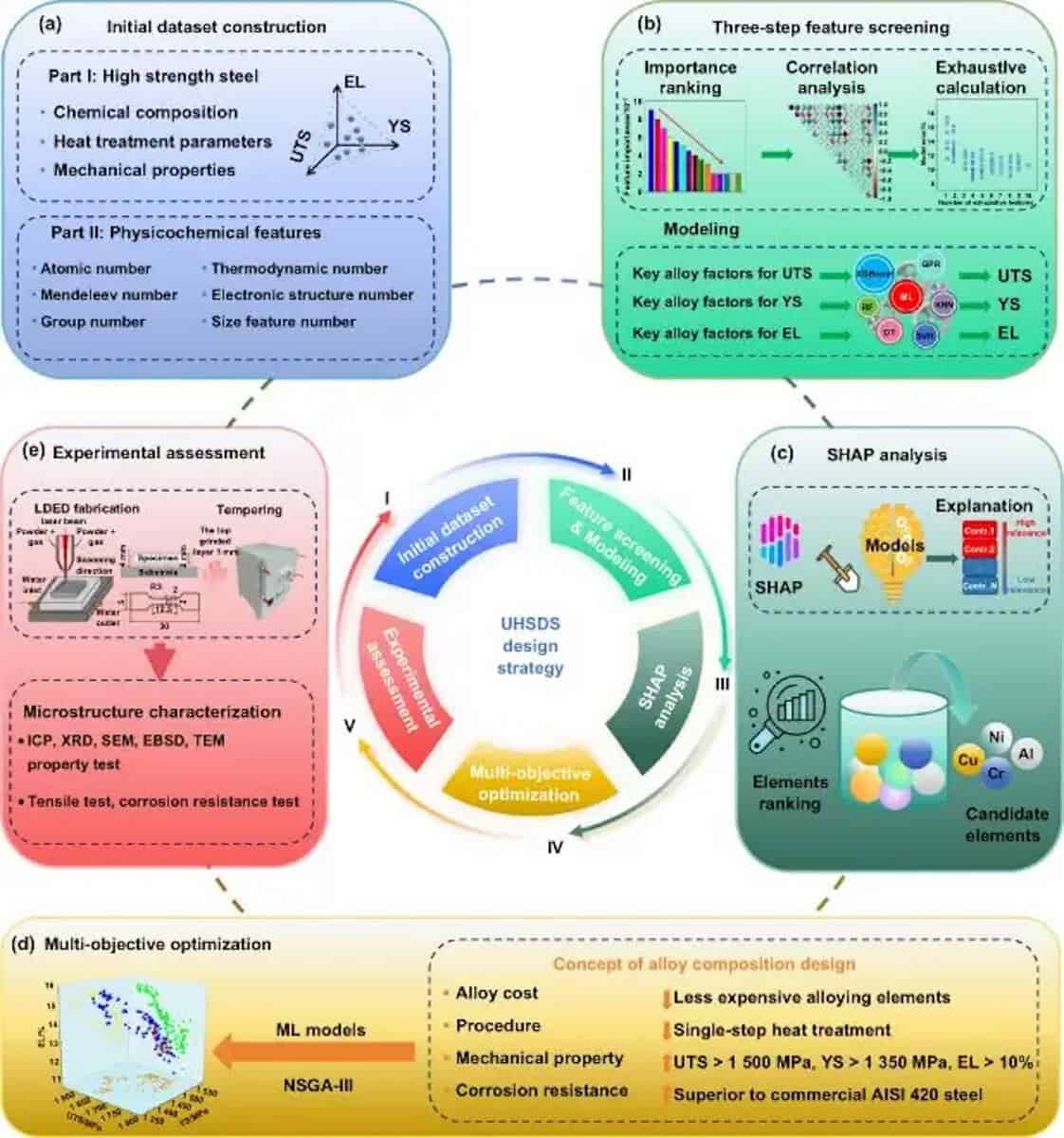
Conventional ultra-high strength steels produced through additive manufacturing typically rely on expensive elements such as cobalt, molybdenum, or high concentrations of nickel. Fabricated parts must then undergo complex, multi-step heat treatments before reaching target strength levels, and they often remain vulnerable to corrosion.
The research team used an interpretable machine learning model to bypass this traditional trial-and-error approach to metallurgy. Rather than treating the algorithm as a black box, the team fed it 81 fundamental physicochemical features of various elements, including atomic radius, electron behaviour, and acoustic velocity. The algorithm identified that a specific blend of iron and chromium, combined with precise amounts of cheaper elements such as silicon, copper, and aluminium, would form an optimal internal structure. This approach to AI-designed steel for 3D printing eliminated the need for costly alloying additions while maintaining performance targets.
Strength, Ductility, and Performance Results
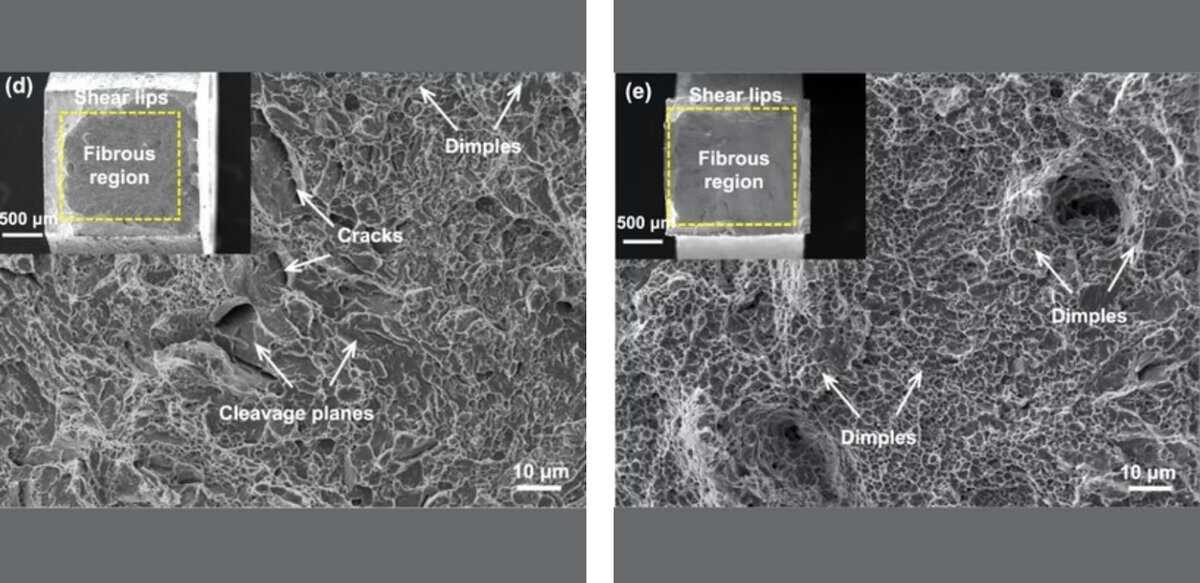
The resulting alloy, Fe-15Cr-3.2Ni-0.8Mn-0.6Cu-0.56Si-0.4Al-0.16C (wt.%), was fabricated using laser-directed energy deposition (LDED) and subjected to a single-step tempering process at 480°C for six hours. Physical testing confirmed the algorithm's predictions: the steel withstood stresses of 1,713 MPa and stretched by 15.5% before fracture. This represents an approximately 30% increase in strength over the metal's raw printed state, accompanied by a doubling of its ductility.
Investigation of the metal's internal architecture revealed that the short heat treatment produced a dense network of nanoscale copper and nickel-aluminium particles. These particles function as barriers that pin structural defects and prevent them from propagating under stress. Simultaneously, microscopic pockets of a softer austenite phase act as energy absorbers by transforming their crystalline structure under tension, a mechanism that prevents brittle failure.
Corrosion Resistance Outperforms Commercial Stainless Steels
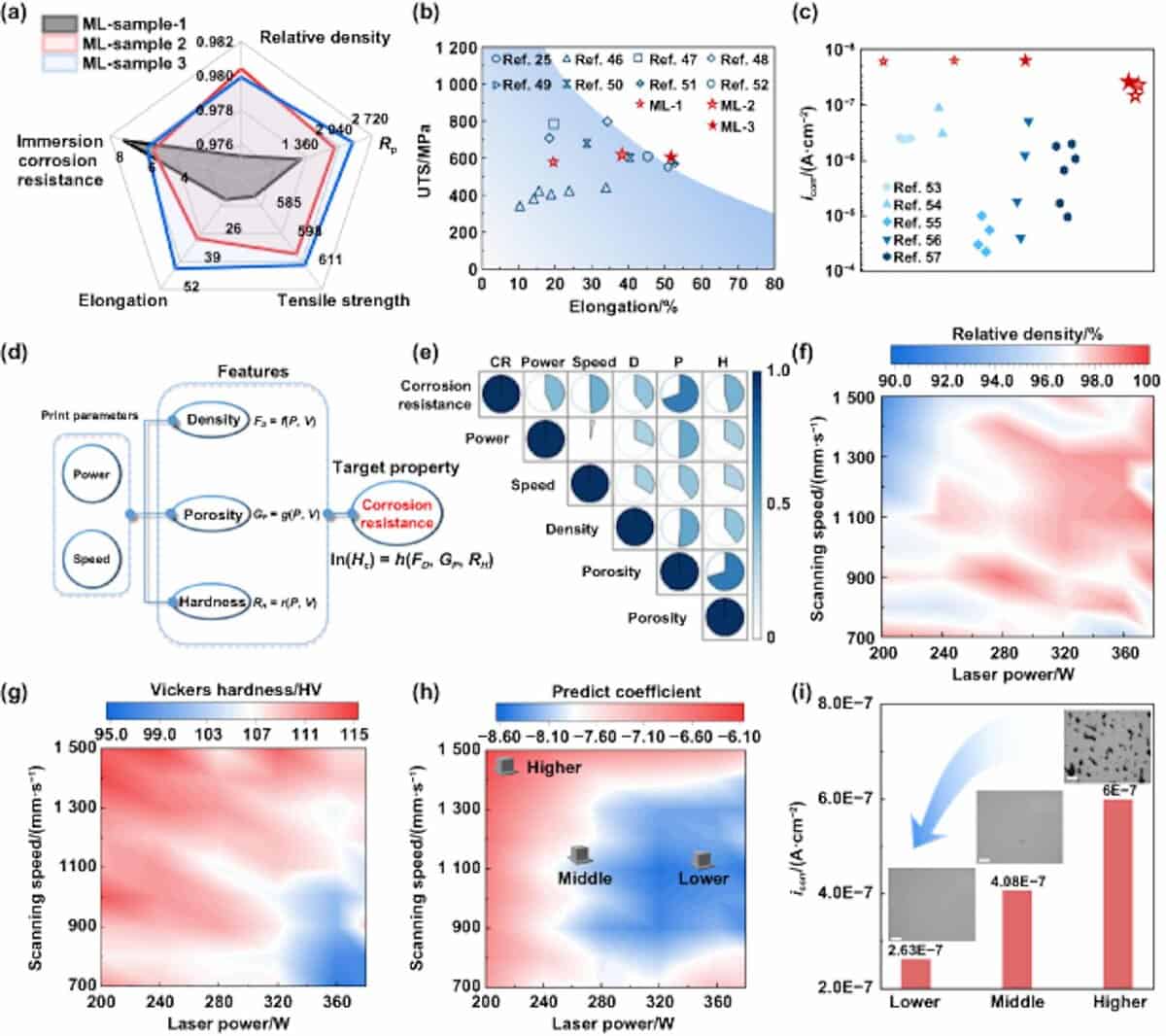
The AI-designed steel for 3D printing also addressed a longstanding rust problem in high-strength alloys. In typical steels, carbide formation depletes chromium from surrounding metal, creating vulnerable zones where corrosion initiates. The researchers found that nanoscale copper particles in the new alloy expelled chromium during their formation, forcing it to remain evenly distributed throughout the matrix. In salt-water testing, the alloy degraded at a rate of just 0.105 millimetres per year, outperforming standard commercial stainless steels including AISI 420, positioning it as a strong candidate among rust-resistant 3D printing alloys for demanding environments.
Limitations and Future Applications
The interpretable machine learning methodology does carry constraints. Because different 3D printing methods heat and cool metals at different rates, the datasets used in this study are specific to LDED and may not transfer directly to other fabrication processes. The researchers note that re-screening of physicochemical features would be required when applying the model to entirely new material classes.
Nevertheless, the study provides a clear framework for replacing slow empirical testing with data-driven alloy design. Industries including aerospace, energy, and marine engineering, where components face sustained exposure to stress, heat, and moisture, stand to benefit from this approach, particularly as major steel producers scale up powder supply for additive manufacturing. As additive manufacturing steel innovation continues to accelerate, AI-designed steel for 3D printing may offer a scalable pathway to producing custom, high-performance components at reduced cost and lead time.


