



The U.S. Army has inaugurated a new Additive Makerspace at Picatinny Arsenal, New Jersey, in a continued expansion of U.S. Army additive manufacturing capabilities. The facility, which opened on March 19, provides engineers at the Combat Capabilities Development Command (DEVCOM) Armaments Centre with access to more than 50 3D printers for rapid prototyping and component production.
The makerspace is designed to bring production capabilities closer to the point of need, reducing reliance on traditional supply chains and accelerating the pace of development within the military's engineering infrastructure.
U.S. Army Additive Manufacturing Explained
U.S. Army additive manufacturing refers to the use of 3D printing technologies to design, prototype, and produce military components on demand. The process constructs objects layer by layer from digital CAD models, supporting a range of materials including plastics, metals, ceramics, and composites.
The approach enables shorter iteration cycles, reduced tooling costs, and the ability to produce complex geometries that would be difficult or impractical to achieve through conventional manufacturing. For defence applications, this translates to faster delivery of prototypes, functional models, and customised parts, capabilities that are particularly relevant in contested logistics environments where speed and adaptability are critical.
New Makerspace at Picatinny Arsenal
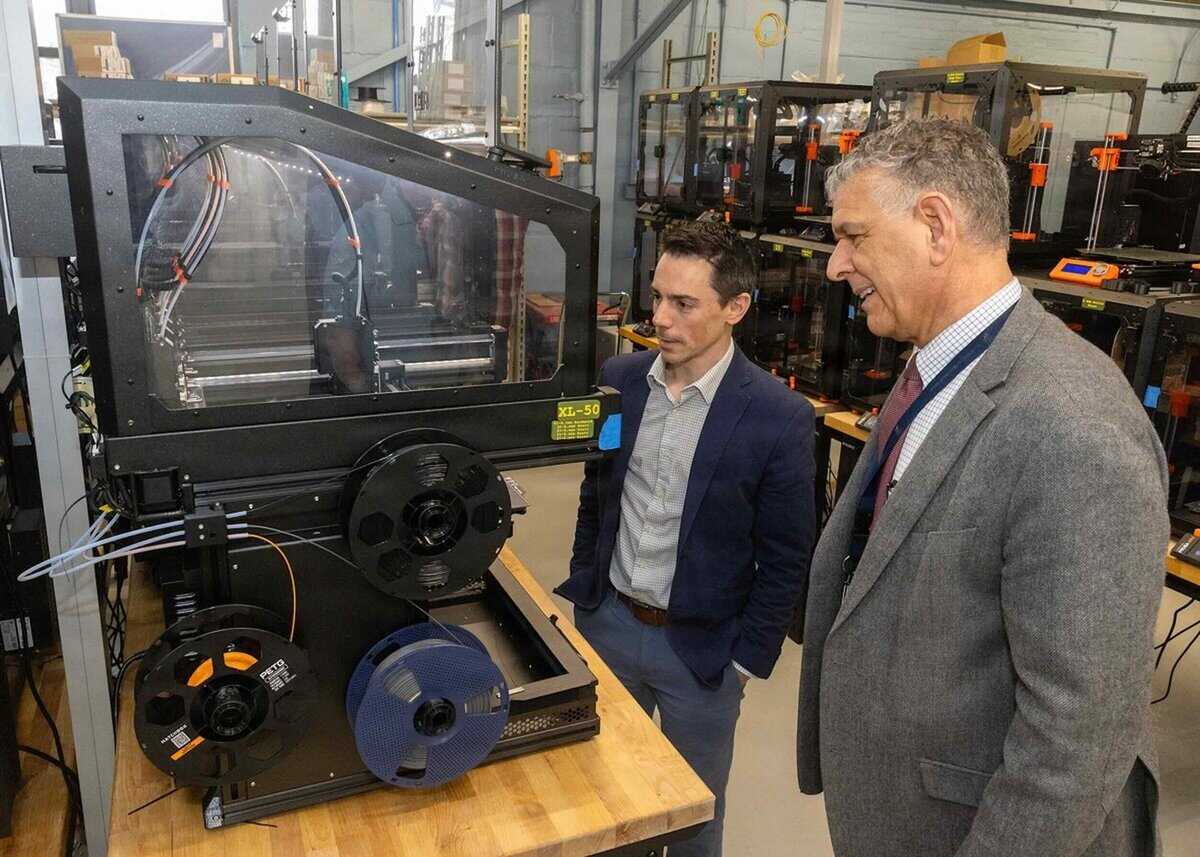
The facility is managed by the Analysis, Materials, and Prototyping Directorate (AMPD), which operates under the Armaments Centre's Munitions Engineering Technical Centre (METC). AMPD's mandate covers manufacturing engineering, prototyping, producibility, and reverse engineering in support of armaments technologies.
Matthew Clemente, a mechanical engineer with AMPD, outlined the facility's purpose:
"The space is here for the Picatinny community to work on prototype design and manufacturing. It serves to add additive manufacturing capacity to the community's projects."
— Matthew Clemente, Mechanical Engineer, AMPD
The makerspace offers a range of advanced printing technologies and material options, enabling engineers to move from design to physical output within the same facility, which is a workflow consistent with the broader industrial adoption of rapid prototyping across aerospace, automotive, and defence sectors. With more than 50 printers available, the space covers multiple material classes, from simple plastic components to technically demanding metal parts.
Thomas Fasano, Senior Scientific Technical Manager of AMPD, framed the facility in operational terms:
"We know this space will be a valuable tool for Armaments Centre engineers to utilise these technologies and expertise — so we can drive speed and innovation to the battlefield."
— Thomas Fasano, Senior Scientific Technical Manager, AMPD
Broader Military Push Toward Distributed Manufacturing
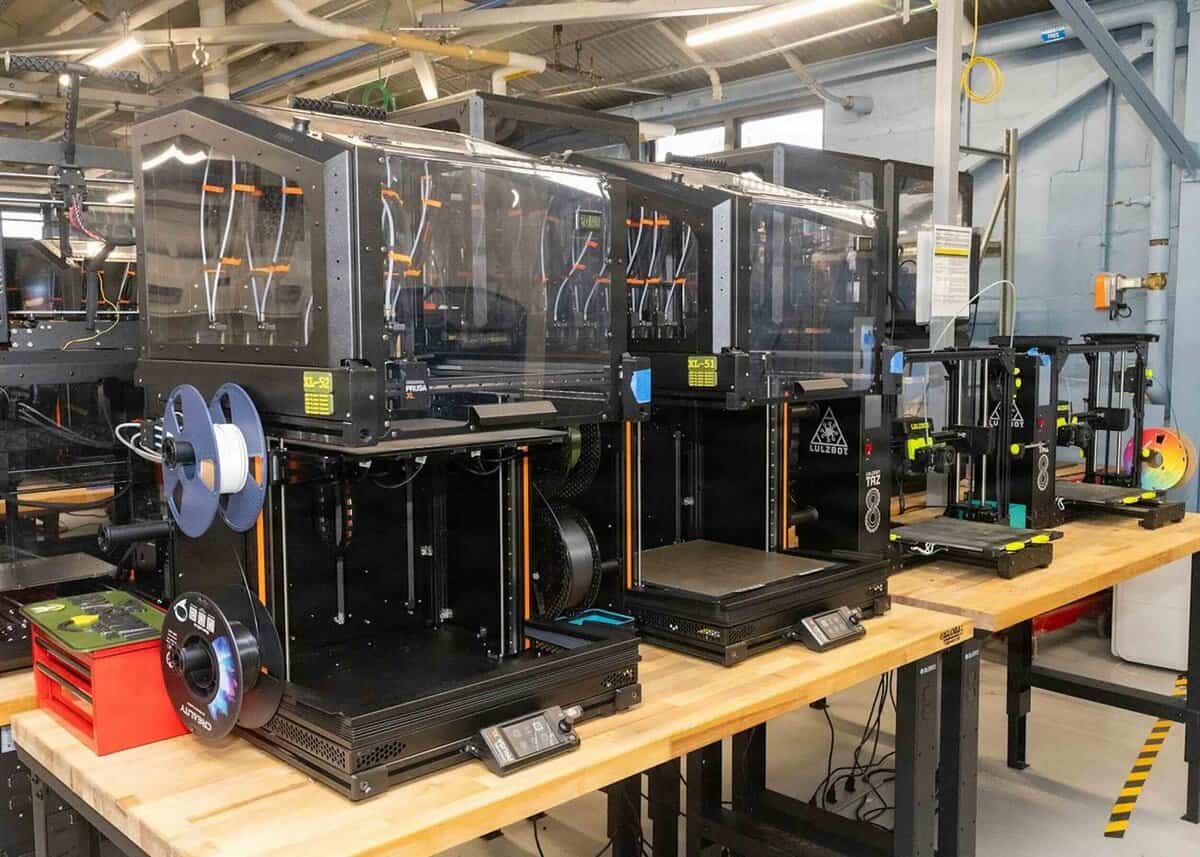
The Picatinny makerspace is part of a wider effort across the U.S. military to embed additive manufacturing into its engineering and logistics infrastructure. Similar facilities have been established at other Army and Department of Defense locations, including the Maneuver Innovation Lab at Fort Moore, Georgia, and the Airborne Innovation Lab at Fort Bragg, North Carolina.
These initiatives reflect a shift from centralised manufacturing toward distributed, point-of-need production. By positioning fabrication capacity closer to development and deployment sites, the Army aims to shorten the distance between design, testing, and fielding. The military has previously outlined plans to use additive manufacturing for faster, on-site repair of tanks and equipment, a strategy that directly reduces dependence on traditional supply chains.
Real-World Military 3D Printing Applications
US Army 3D printing applications now span a broad spectrum of use cases. The technology has been deployed to fabricate items ranging from simple plastic buckles to complex metal vehicle components, and the Army is also using 3D printing to produce drone swarms for combat training. In both forward-deployed and domestic environments, additive manufacturing supports equipment maintenance, field repairs, and rapid prototyping during development cycles.
The operational advantage lies in the ability to produce components on demand rather than wait for parts to move through conventional procurement and logistics channels. In contested logistics scenarios, this capability directly supports operational readiness.
Outlook for Military AM Infrastructure
The opening of the Picatinny Additive Makerspace signals continued institutional investment in U.S. Army additive manufacturing infrastructure. For the broader additive manufacturing industry, facilities like this reinforce demand for scalable, multi-material solutions and underscore the strategic value of building robust, on-site manufacturing capacity within defence ecosystems.
The trend extends beyond the United States. The Indian Army has deployed concrete 3D printing systems for rapid border infrastructure construction in Sikkim under Project PRABAL, and has established the Agnishodh Research Cell at IIT Madras to advance additive manufacturing for defence applications, signalling a parallel institutional push toward distributed, indigenous AM capacity.


