



BMW Group, the German automotive manufacturer, has confirmed that 3D printed car parts are now integrated into series production vehicles across all its brands, including BMW, MINI, Rolls-Royce, and BMW Motorrad. The announcement marks a significant milestone in the company’s three-decade investment in additive manufacturing technology.
The automaker first commissioned additive manufacturing equipment in 1990 and has since expanded its capabilities to encompass prototyping, series production, and on-demand automotive spare parts. Timo Göbel, BMW Group’s Head of Additive Manufacturing, states that the technology “is now fully integrated across all phases of the product life cycle.”
What Are 3D Printed Car Parts?
3D printed car parts are automotive components produced using additive manufacturing processes, in which material is deposited layer by layer to form a finished part. Unlike conventional methods such as milling or casting, additive manufacturing enables complex geometries and rapid iteration without the need for moulds or dedicated tooling.
In BMW’s case, these components range from early-stage prototypes used in vehicle development to production-grade parts installed in customer vehicles. The technology has proved particularly valuable for customised and limited-edition models, as well as for producing after-sales replacement parts on demand.
Three Decades of 3D Printing at BMW
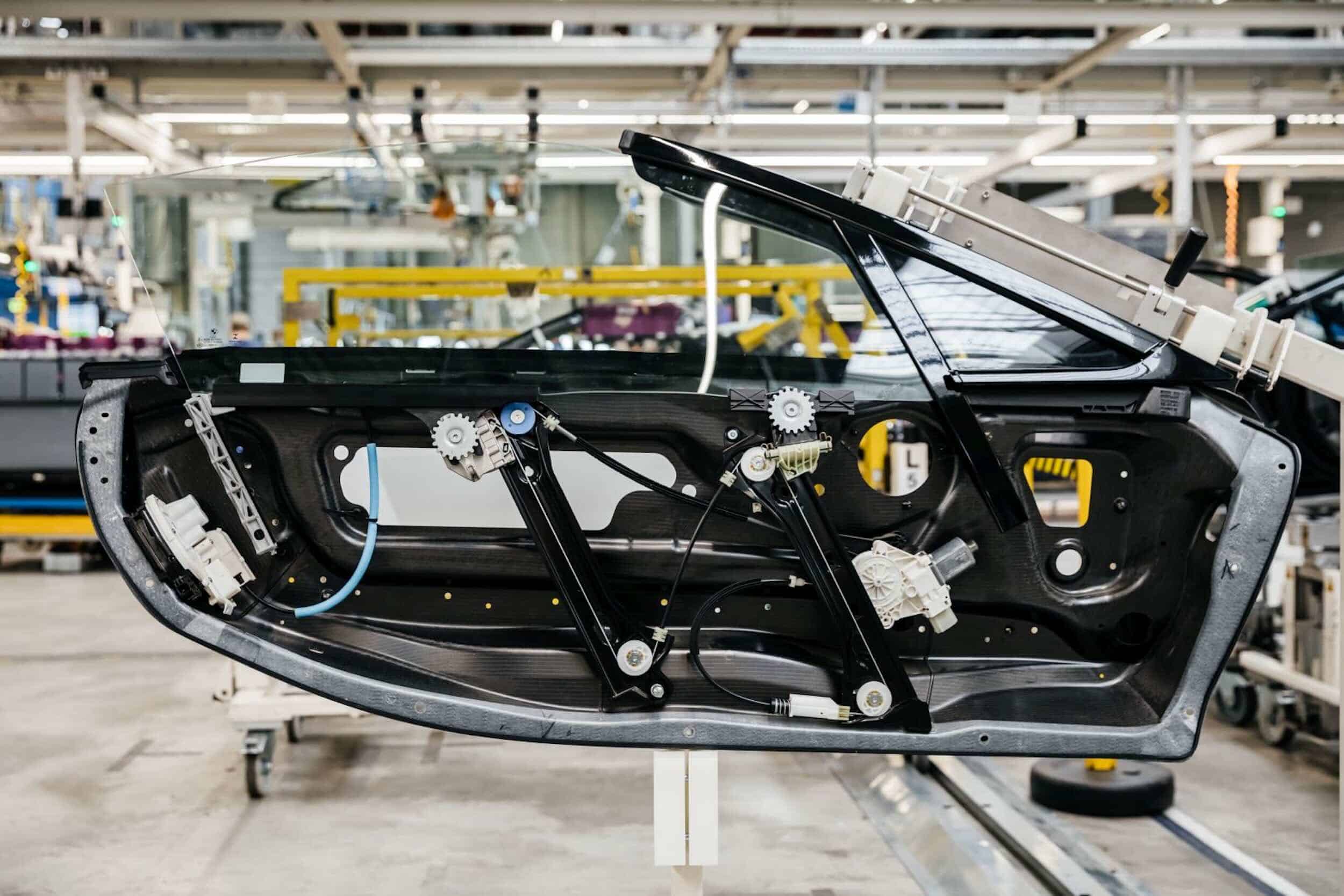
BMW’s Rapid Technologies Centre produced its first prototype parts using additive manufacturing equipment between 1990 and 1991. In 2012, polymer brackets entered series production in the Rolls-Royce Phantom. By 2017, metal additive manufacturing components were integrated into the BMW i8 Roadster, and that same year, the MINI Yours Customised programme allowed customers to design and order personalised printed parts.
BMW’s Neue Klasse electric vehicles and the latest generation of its electric drive technology have both benefited from additive manufacturing. Göbel notes that printed components were instrumental in compressing development timelines. Where a failed crash test component previously required weeks of retooling, a redesigned part can now be produced and ready for retesting within hours.
“Through scaling, we will be able to manufacture larger components with significantly improved properties across the entire product development process — and with substantially shorter lead times. For many applications, we will no longer need tooling, which greatly increases flexibility and speed.”
— Timo Göbel, Head of Additive Manufacturing, BMW Group
Inside BMW's AM Campus
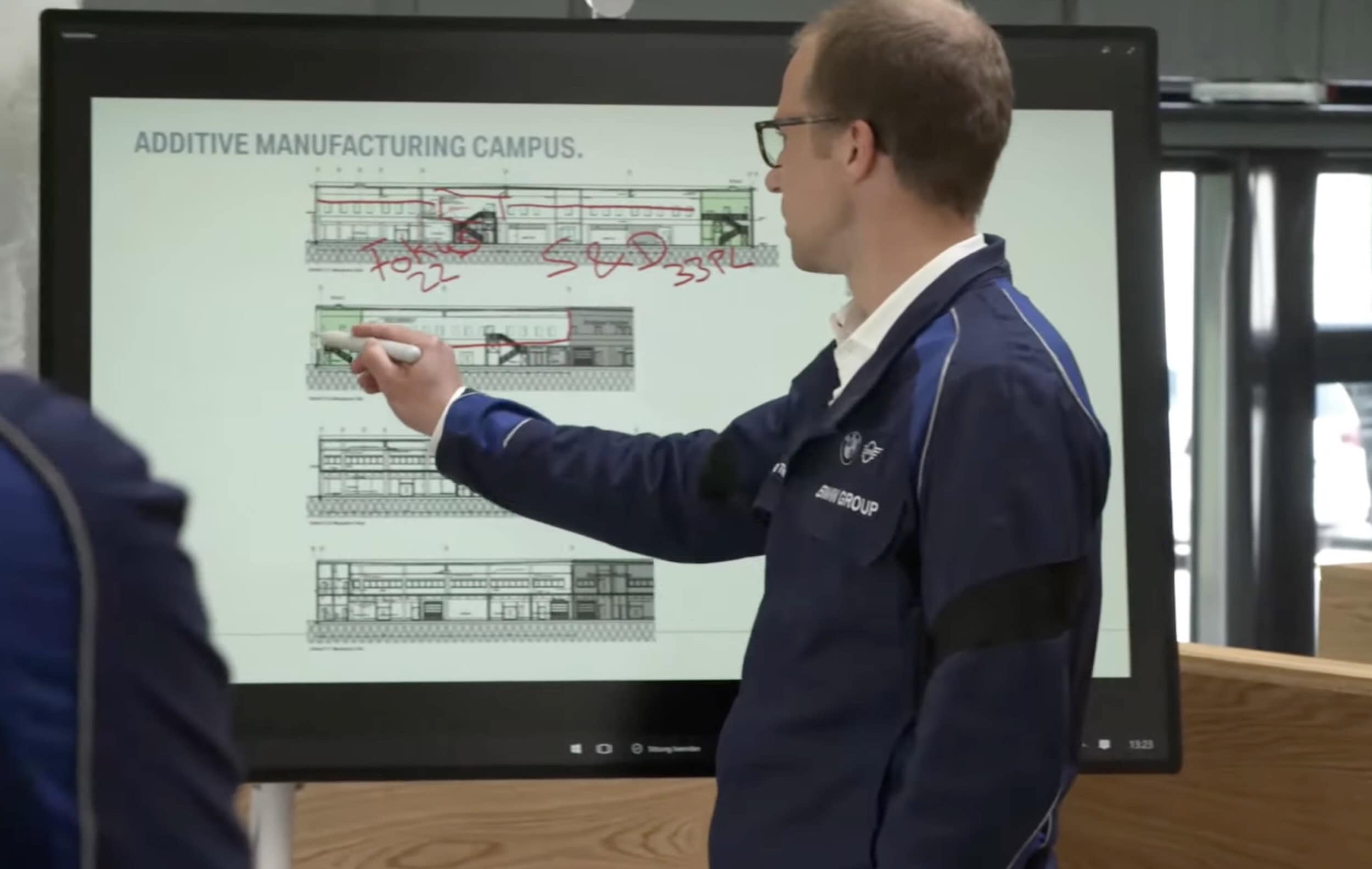
Opened in 2020 in Oberschleissheim, near Munich, the BMW Group Additive Manufacturing Campus consolidates production, research, and workforce training under one roof. Since becoming operational, the facility has manufactured more than 1.6 million 3D printed components for use across all BMW Group brands. An additional 100,000-plus components are produced annually at decentralised vehicle plants worldwide.
One recent example of the campus’s output is a 3D printed centre console carrier for a BMW vehicle scheduled for 2027 production, which consolidates seven traditionally separate parts into a single printed component. An estimated 18,000 of these carriers will be produced annually using robot-based large-format additive manufacturing.
The campus serves as BMW’s central hub for scaling additive manufacturing into series production. Its strategy centres on automated, digitally connected process chains combined with open-material systems, and BMW has already integrated key subprocesses from the Industrialisation and Digitalisation of Additive Manufacturing (IDAM) initiative into its infrastructure.
Wire Arc AM (WAAM) Explained
Current metal AM methods, such as laser beam melting, rely on fine powder deposited within sealed chambers. While effective for high-detail components, these processes are constrained by limited build volumes and slower deposition rates, making them impractical for producing large structural automotive parts.
Wire Arc Additive Manufacturing (WAAM) addresses these limitations. Used in the aerospace, oil and gas, and maritime sectors, WAAM deposits metal via electric arc at speeds powder-based methods cannot match, enabling production of large, single-piece structural components.
BMW began developing the process at its Additive Manufacturing Campus in 2024. Vehicle testing using WAAM-produced components commenced in 2025, with series production targeted for 2027. The technology is expected to prove particularly advantageous for crash testing, where rapid component replacement reduces development costs and timelines.
Future Impact on Automotive Production
BMW’s systematic integration of 3D printed car parts into its production ecosystem signals a broader shift in automotive manufacturing. By reducing dependence on conventional tooling and third-party supply chains, the company gains flexibility across the industry. The ability to produce digital spare parts on demand, scale customisation for limited-edition vehicles, and compress development cycles positions additive manufacturing as a core production technology rather than a prototyping novelty.
As BMW advances toward large-scale WAAM production by 2027, the implications extend well beyond a single manufacturer. Other programmes, such as APMA’s Project Arrow Vector with its 3D-printed polymer-aluminium chassis, are exploring additive manufacturing at the structural level. With 3D printed car parts moving from niche applications to fully integrated series production, the broader automotive industry may be approaching a fundamental change in how vehicles are designed, tested, and built.


